Realize Carbon Neutrality
Response to climate change
The NTN Group is promoting carbon neutrality activities in response to climate change and has set the targets for reducing Scope 1 and 2 emissions by fiscal year 2030 and fiscal year 2035. To that end, we are promoting CO2 emission reductions in our business activities. To advance CO2 reduction in the supply chain (Scope 3), we established a new working group in fiscal year 2024 to first formulate and promote reduction measures domestically. We will strengthen collaboration with suppliers to promote activities toward ”Achieving carbon neutrality by fiscal year 2050.”
*The NTN Group calculates and reports only CO2 emissions from energy sources among the GHG emissions.
■NTN’s carbon neutrality targets
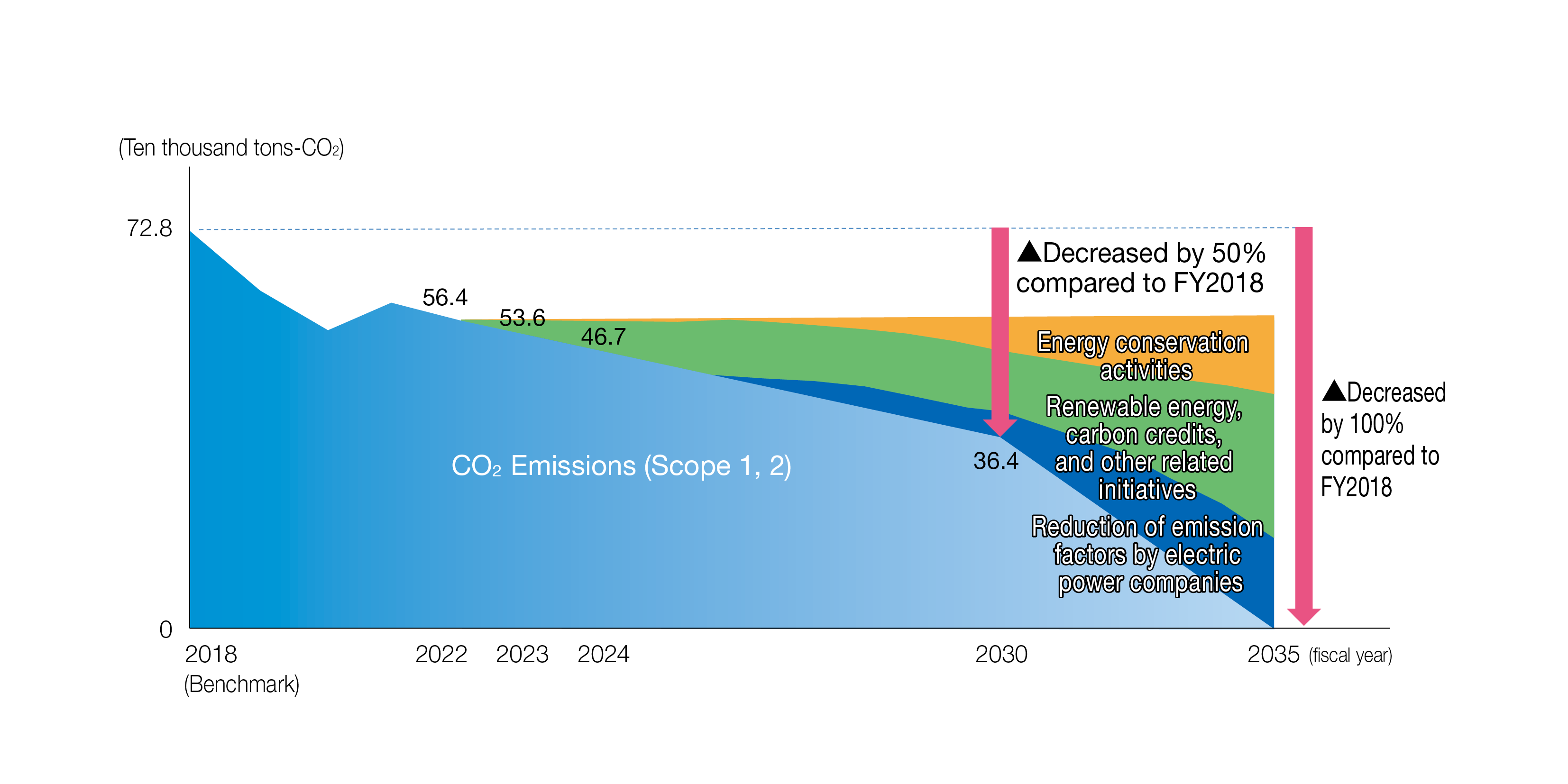
CO2 emission reduction targets (Scope 1 and 2)
50% reduction by FY2030(compared to FY2018)
Carbon neutrality by FY2035
CO2 emission reduction targets (Scope 3)
Achieve carbon neutrality by FY2050
Governance structure for promoting carbon neutrality initiatives
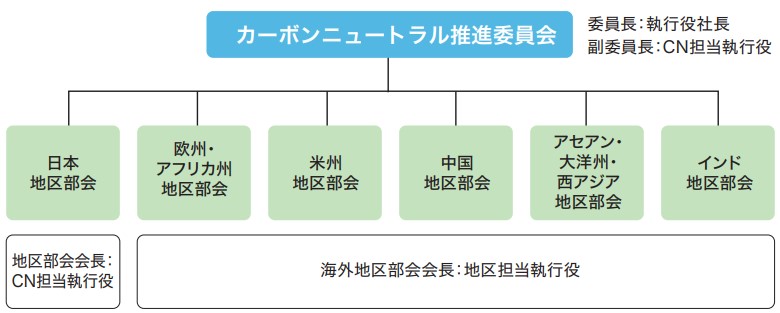
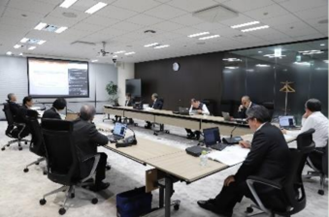
To promote carbon neutrality activities across the NTN Group, we established the Carbon Neutral Strategy Promotion Department in April 2023, followed by the Carbon Neutrality Promotion Committee and regional subcommittees in July of the same year, thereby establishing a global promotion system. The Carbon Neutrality Promotion Committee, chaired by the President, Executive Officer, meets once every six months online, connecting the headquarters with locations around the world to facilitate global information sharing, mutual awareness raising, and the horizontal deployment of best practices. The regional subcommittees, chaired by Executive Officers in charge of each region, meet four times a year to review measures and monitor performance according to the actual conditions in each region, and report the results to the Carbon Neutrality Promotion Committee.
■Carbon neutrality promotion system
Progress management based on the carbon neutrality roadmap
The NTN Group has created carbon neutrality roadmaps as indicators for effectively advancing carbon neutrality activities. Based on these roadmaps, we closely follow the status of activities at each stage and manage progress toward our targets. The roadmaps are created by each region and each business site, showing specific measures and timelines in detail, and we are promoting initiatives toward achieving carbon neutrality with the entire company working as one.
■Carbon neutrality roadmap
Reduction measures for each scope
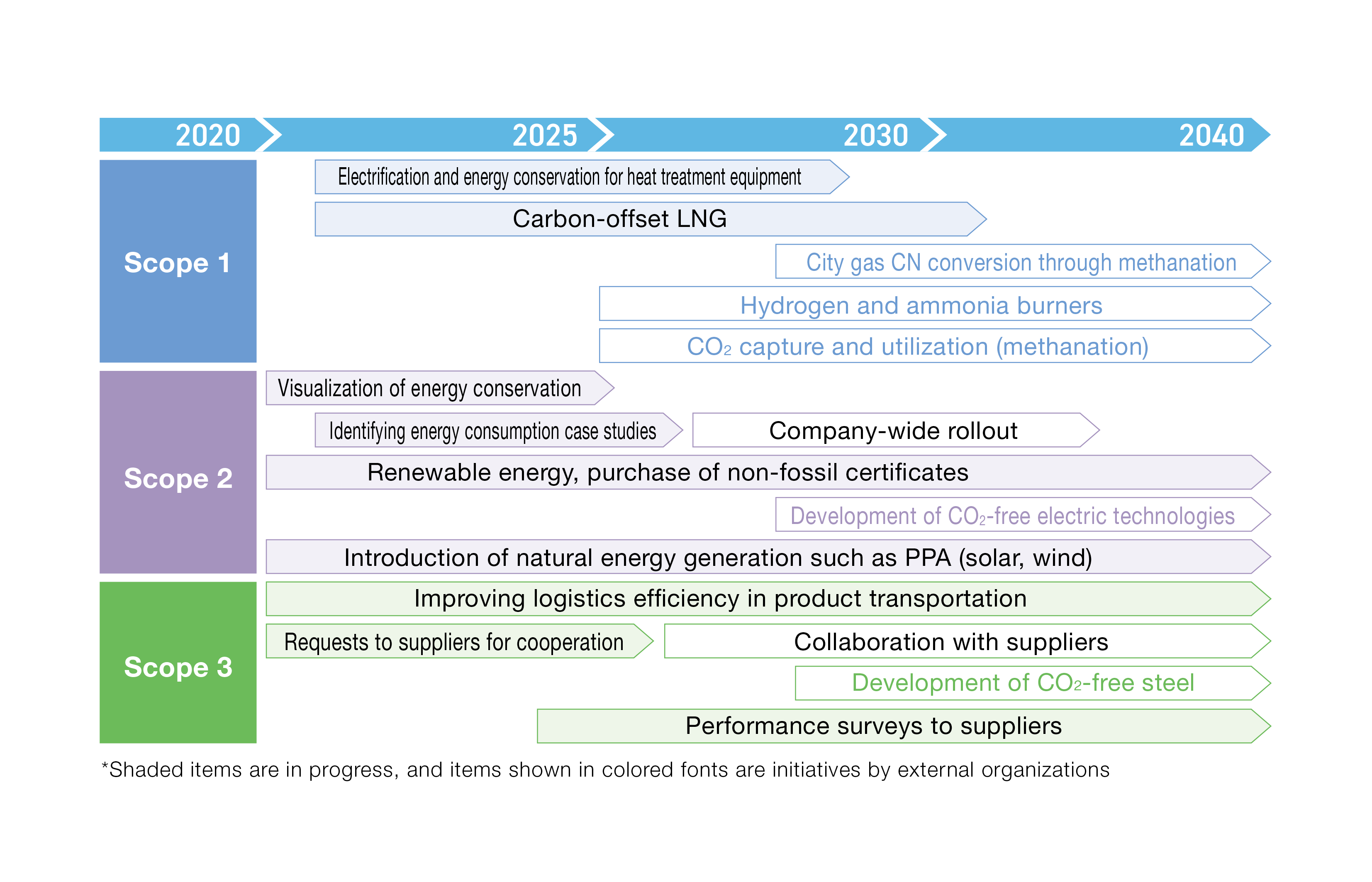
This shows the overall picture of initiatives in each scope. We are promoting CO2 emission reduction improvements within the company, such as electrification, energy conservation, and the introduction of renewable energy generation, while also working with external partners to accelerate these initiatives.
■Initiatives for each scope
CO2 emission results and initiatives
Emissions from our own operations (Scope 1 (direct emissions), Scope 2 (indirect emissions))
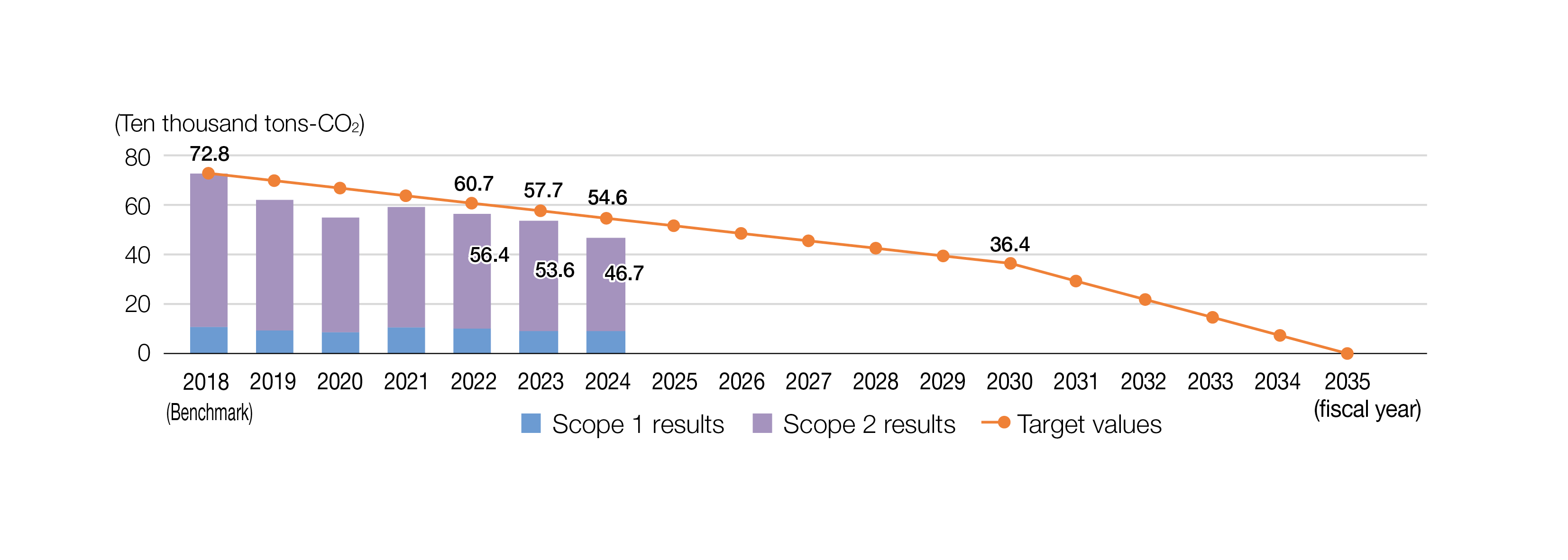
The fiscal year 2024 results were Scope 1: 82,669 tons (domestic: 45,596 tons, overseas: 37,073 tons), Scope 2: 384,158 tons (domestic: 180,974 tons, overseas: 203,184 tons).
For Scope 2, domestic business sites are calculated using market-based emission factors, while overseas business sites are calculated using location-based emission factors.
■Graph of Scope 1 and 2 results and targets
Examples of initiatives
The following are examples of our initiatives to reduce CO2 emissions.
Energy-saving measures for heat treatment equipment”
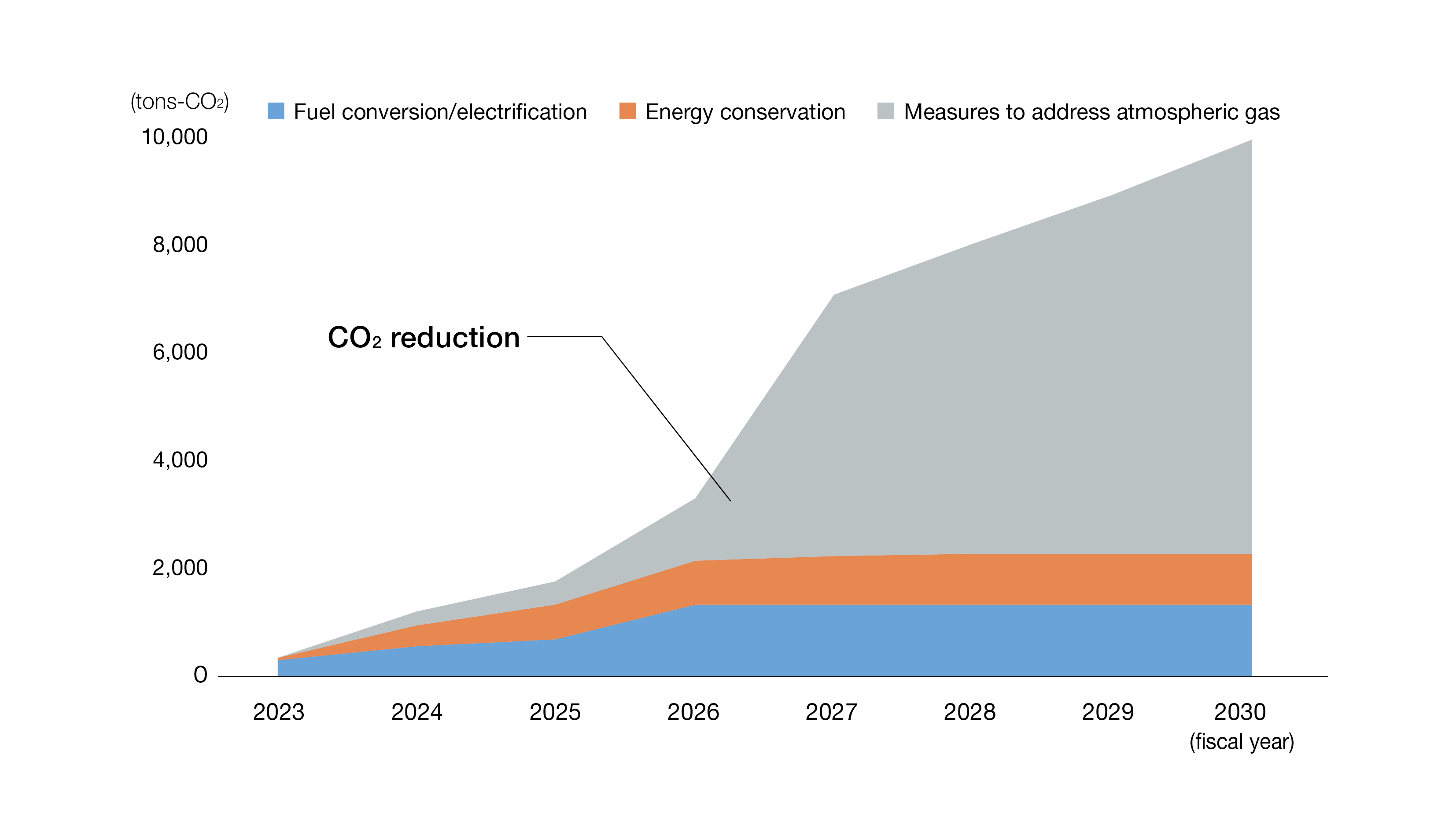
To reduce CO2 emissions from heat treatment equipment, we are promoting three measures: fuel conversion and electrification, energy conservation, and atmospheric gas control. All newly introduced heat treatment furnaces since 2017 are electric furnaces. Additionally, we have implemented high-efficiency insulation materials to minimize heat loss from the outer walls of the heat treatment furnaces, thereby reducing fuel consumption. Furthermore, we are reducing CO2 emissions through atmospheric gas countermeasures in furnaces dedicated to ordinary quenching. In FY2024, we reduced 676 tons of CO2 through energy conservation measures for heat treatment equipment. This is equivalent to approximately 14% of the domestic Scope 1 reduction in fiscal year 2024.
■Overall picture of initiatives for heat treatment equipment (Domestic)
Reduction of energy used in business activities
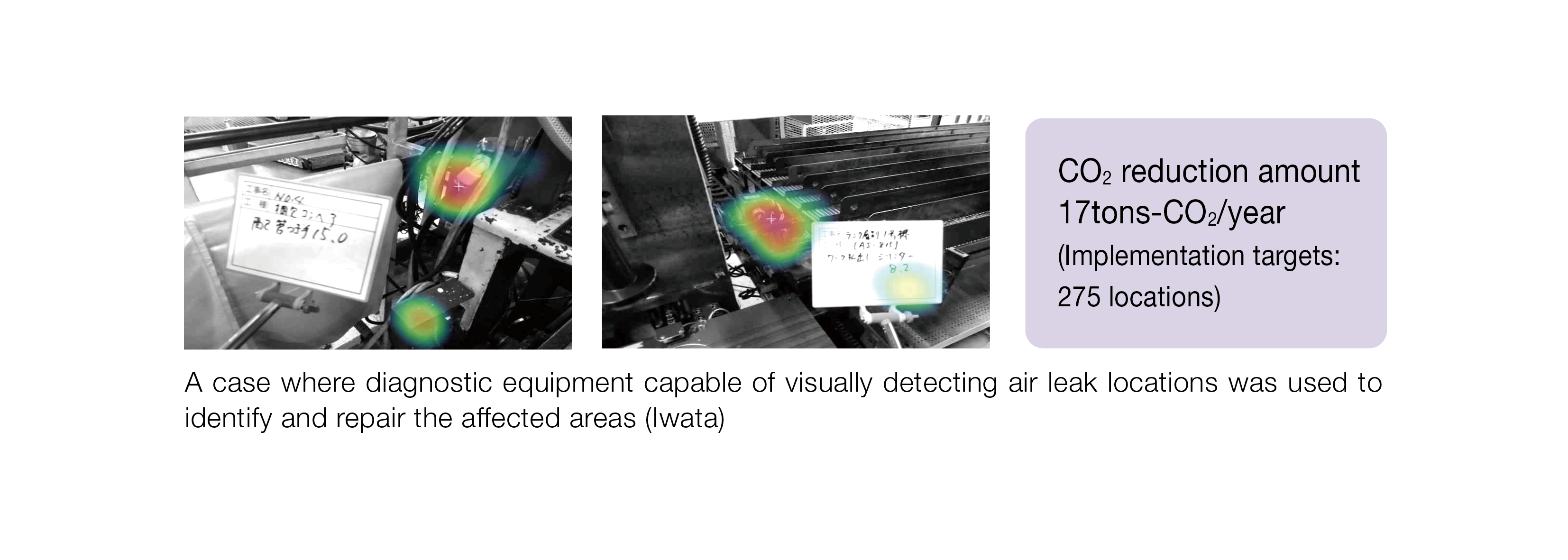
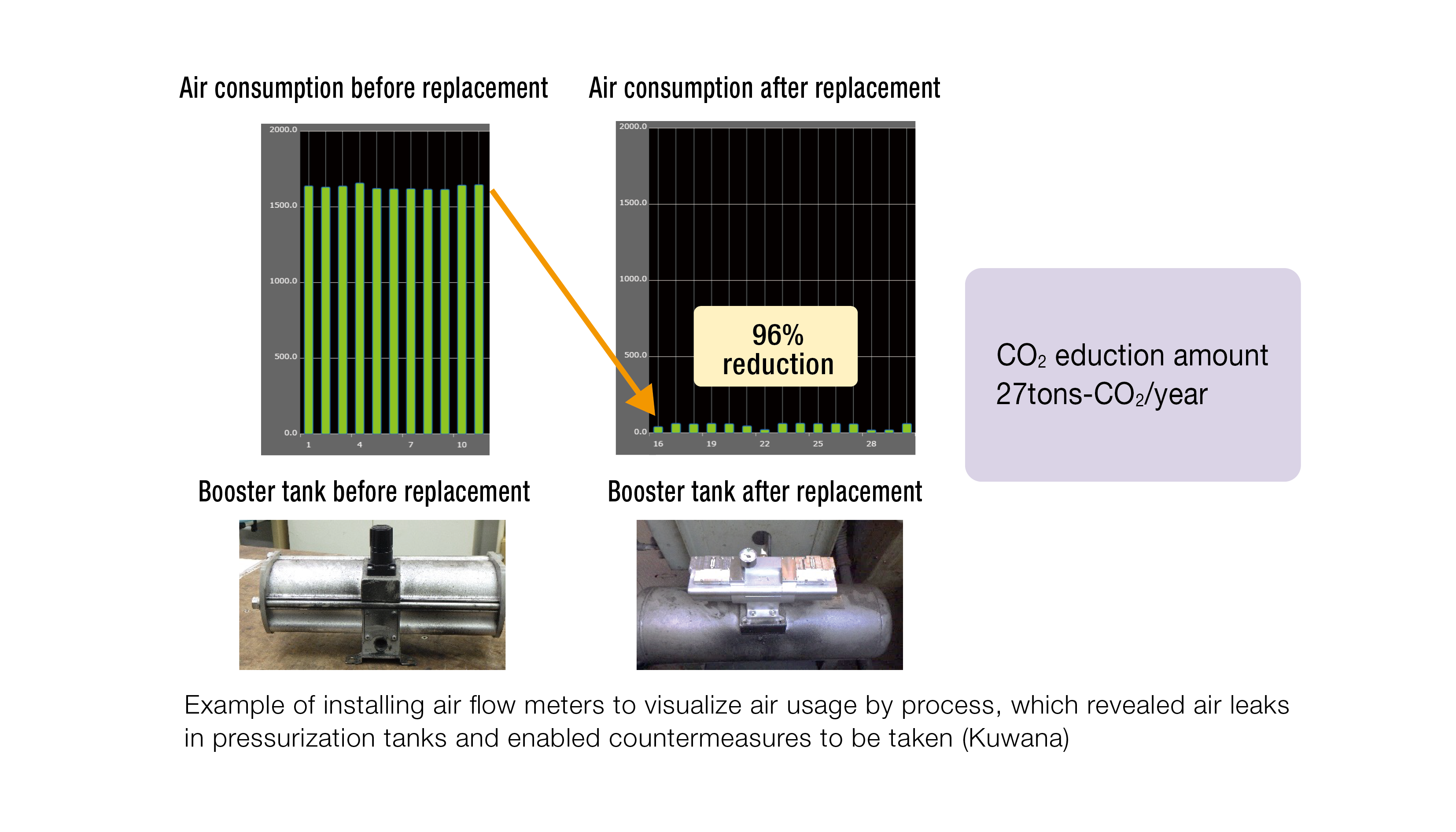
To reduce CO2 emissions within our company, we are advancing waste visualization and energy use reduction.
The results of energy-saving measures at domestic business sites are compiled into a database, and best practices are also deployed and shared with overseas business sites. Going forward, we will enable overseas business sites to also register in the database, promoting bidirectional information sharing.
Additionally, since fiscal year 2023, we have introduced internal carbon pricing as an investment decision indicator for new capital investments, promoting low-carbon management.
■Energy reduction measures
Promoting the introduction of natural energy power generation sources and the procurement of renewable energy-based electricity
Implementation results
The NTN Group is working to reduce CO2 emissions (Scope 2) by installing on-site renewable energy power generation facilities at its business sites through various schemes (PPAs, leases, and self-investment). Additionally, we are actively promoting the procurement of renewable energy and carbon offset electricity through renewable energy and credits. In FY2024, we reduced CO2 emissions by 46,576 tons in Japan and 8,388 tons overseas.
■Natural energy power generation performance (FY2024)
| Region | Amount of electricity generated (kWh) | CO2 reduction (tons-CO2) |
|---|---|---|
| Japan | 2,017,849 | 853 |
| Mexico | 1,027,937 | 378 |
| Thailand | 2,547,296 | 1,226 |
| India | 9,727 | 7 |
| China | 11,512,059 | 6,777 |
| Total | 17,114,868 | 9,241 |
■Procurement of renewable electricity (FY2024)
| Region | Amount procured (kWh) |
CO2 reduction (tons-CO2) |
|---|---|---|
| Japan | 108,858,865 | 45,723 |
| Total | 108,858,865 | 45,723 |
Example of activities
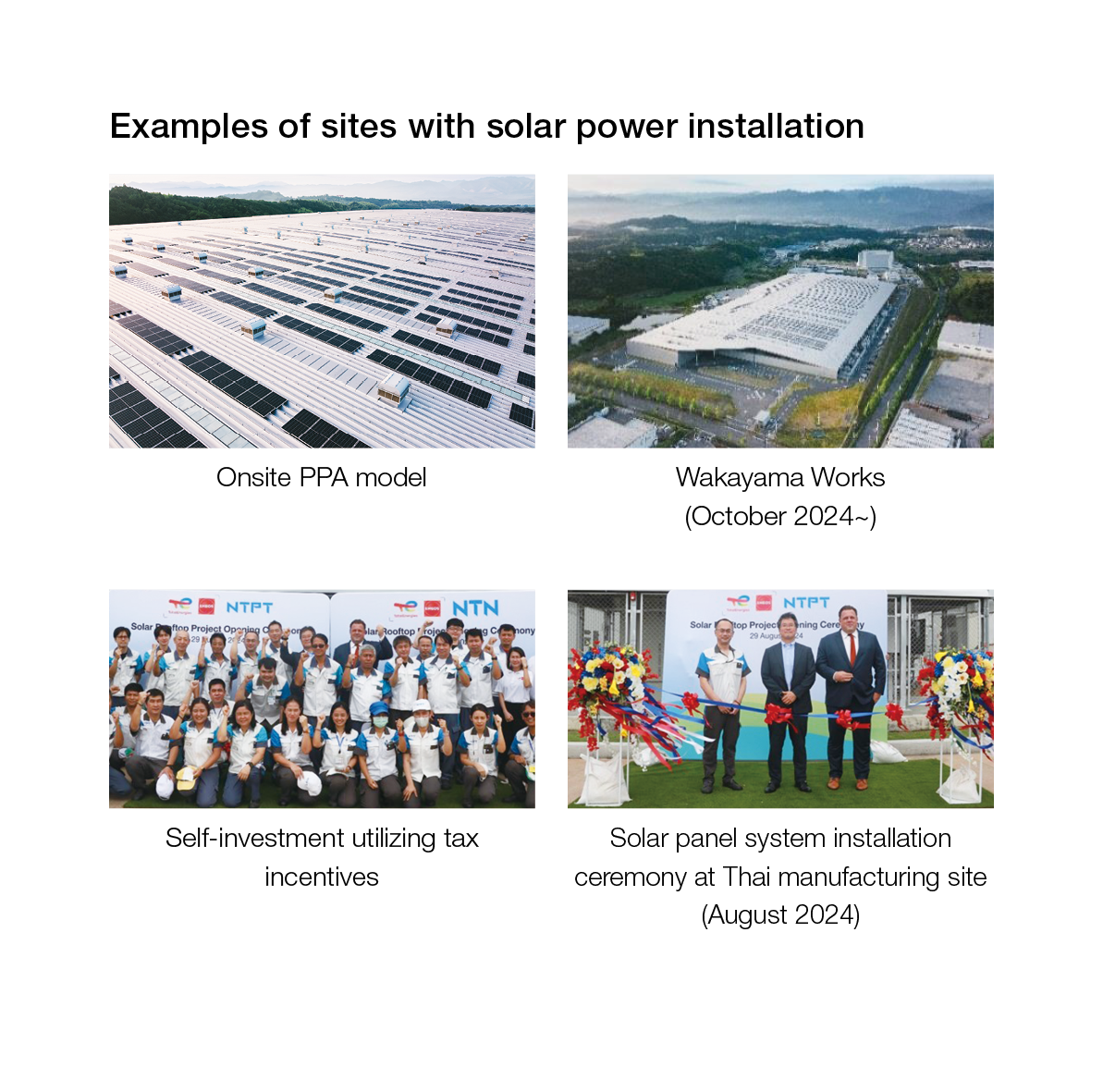
As part of our carbon neutrality efforts, we are promoting the introduction of renewable energy at both domestic and overseas sites. In Japan, we are expanding the use of solar power generation through Power Purchase Agreements (PPAs). In fiscal year 2024, solar power generation began at the Wakayama Works in November, and solar power facilities were also installed at the Kuwana Works, Iwata Works, and Engineering Plastics Works. In Thailand, solar power facilities were installed through self-investment, utilizing tax incentives.
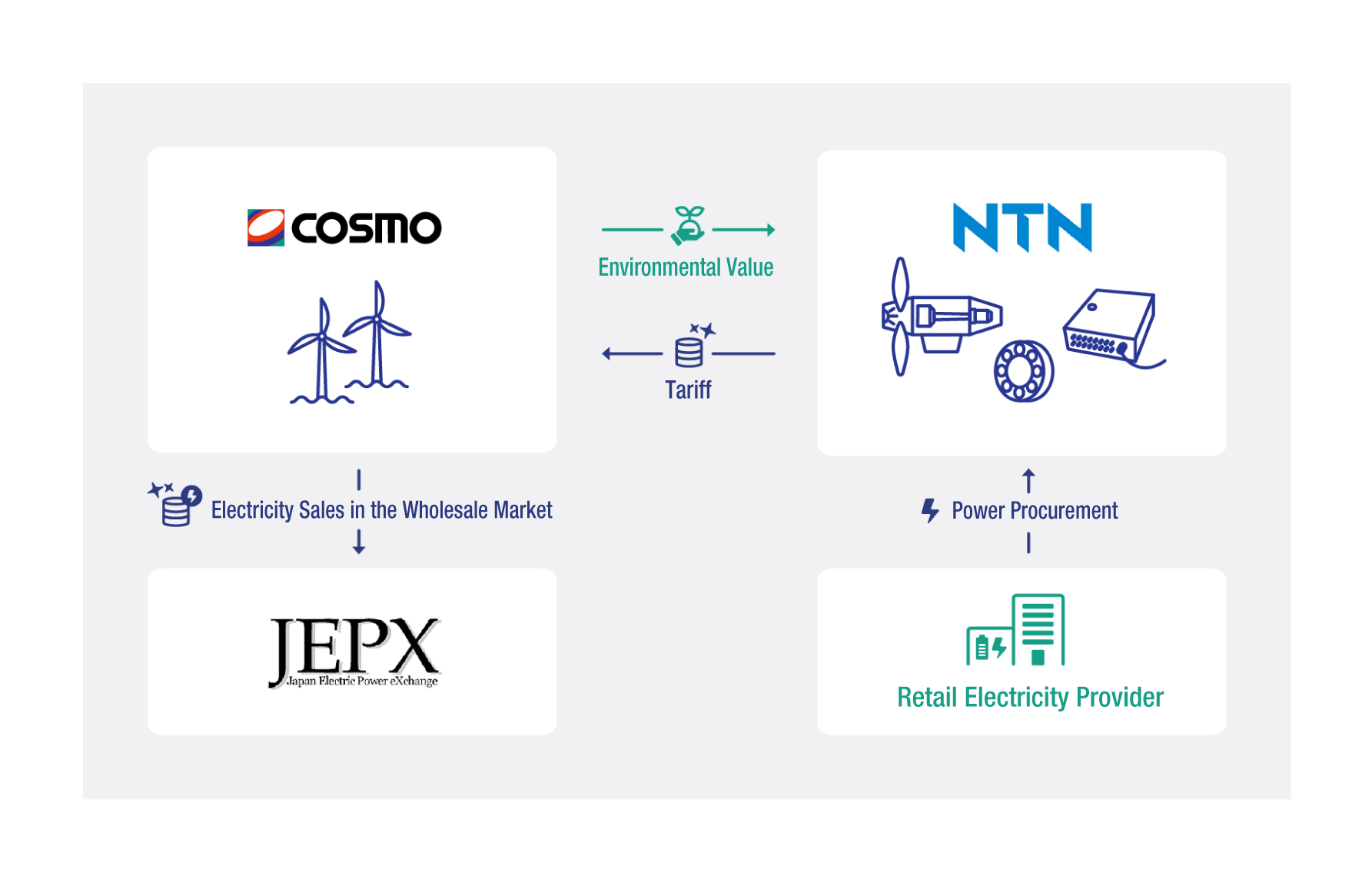
On May 7, 2025, we signed our first Virtual PPA with Cosmo Eco Power Co., Ltd., a wind power generation company. Under this agreement, we directly purchase only the environmental value corresponding to the amount of electricity generated.
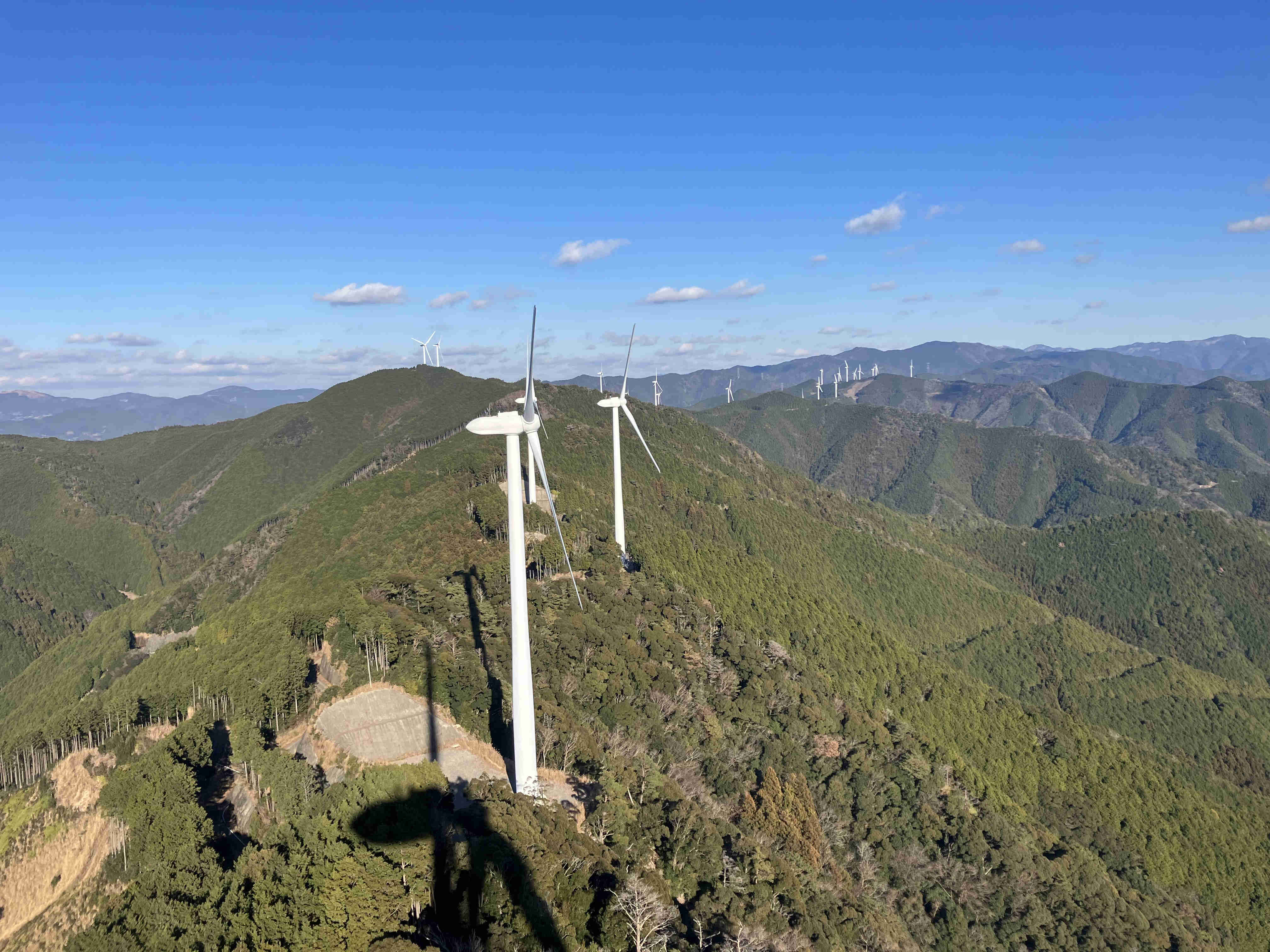
The power plant covered by this PPA is the Chuki Wind Farm, operated by Cosmo Eco Power Co., Ltd., which began commercial operation in April 2021 and supplies electricity to the Kansai area, where our company also operates. The operating wind turbines are equipped with our bearings, as well as our Condition Monitoring System (CMS), “Wind Doctor,” which is used for monitoring operational status and preventive maintenance.
Through this PPA, we will receive the environmental value equivalent to approximately 10 million kWh annually from the Chuki Wind Farm over the next 16 years, enabling us to reduce CO2 emissions by approximately 4,200 tons per year, equivalent to the emissions of about 1,700 households.
In addition, all domestic production sites are implementing CO2-free electricity plans offered by power companies or procuring non-fossil certificates from the trading market.
■Promoting the introduction of natural energy power generation sources and the procurement of CO2-free electricity
■Image of the Virtual PPA
■Chuki Wind Farm
CO2 emissions in the supply chain (Scope 3)
The NTN Group aims to achieve carbon neutrality, including supply chain emissions (Scope 3), by FY2050. At domestic business sites, we calculate Scope 3 emissions using emission factors from input-output tables and IDEA (Inventory Database for Environmental Analysis). To reduce CO2 emissions in the supply chain, we have newly established a working group to develop and promote reduction measures. Category 1 ”Purchased Goods and Services,” which accounts for the largest emissions among all categories, is mostly due to the procurement of raw steel materials and semi-finished products such as forgings and machined parts. Therefore, we first conducted an emissions survey of steel manufacturers, taking into account differences in manufacturing methods. In the future, we will continue to conduct surveys with suppliers while reviewing the emission factors used and improving the Scope 3 calculation method in order to better understand and reduce emissions based on actual conditions globally.
■Supply chain emissions (Scope 3) [Japan]
(Unit: Tons)
| Category | FY2023*1 | FY2024*1 | ||||
|---|---|---|---|---|---|---|
| Composition ratio | Year-on-year | Third-party verification |
||||
| 1 | Purchased goods and services | 2,189,792 | 1,988,472 | 93.17% | 90.81% | ○ |
| 2 | Capital goods | 46,432 | 51,942 | 2.43% | 111.87% | ○ |
| 3 | Fuel and energy-related activities not included in Scope 1 and 2 | 54,783 | 51,901 | 2.43% | 94.74% | ○ |
| 4 | Upstream transportation and distribution | - | 255 | 0.01% | - | |
| 5 | Waste generated in operations | 16,905 | 15,919 | 0.75% | 94.17% | |
| 6 | Business travel | 1,285 | 1,278 | 0.06% | 99.46% | |
| 7 | Employee commuting | 4,667 | 4,643 | 0.22% | 99.49% | |
| 8 | Upstream leased assets <Not applicable> | - | - | - | - | |
| 9 | Downstream transportation and distribution*2 | 17,582 | 15,938 | 0.75% | 90.65% | ○ |
| 10 | Processing of sold products <Not applicable> | - | - | - | - | |
| 11 | Use of sold products <Not applicable> | - | - | - | - | |
| 12 | End-of-life treatment of sold products | 5,233 | 3,995 | 0.19% | 76.34% | |
| 13 | Downstream leased assets <Not applicable> | - | - | - | - | |
| 14 | Franchises <Not applicable> | - | - | - | - | |
| 15 | Investments <Not applicable> | - | - | - | - | |
| Total for Categories 1-15 | 2,336,679 | 2,134,343 | 100.00% | 91.34% | ||
*1 Calculated using emission factors listed in the ”Database of Emissions Unit Values for Accounting of Greenhouse Gas Emissions, etc., by Organizations Throughout the Supply Chain (Ver3.3)” (Ministry of the Environment, Japan)
*2 The verification scope for Category 9 is limited to ”domestic logistics where NTN is the shipper”
Partnership with suppliers and enhancing logistical efficiency
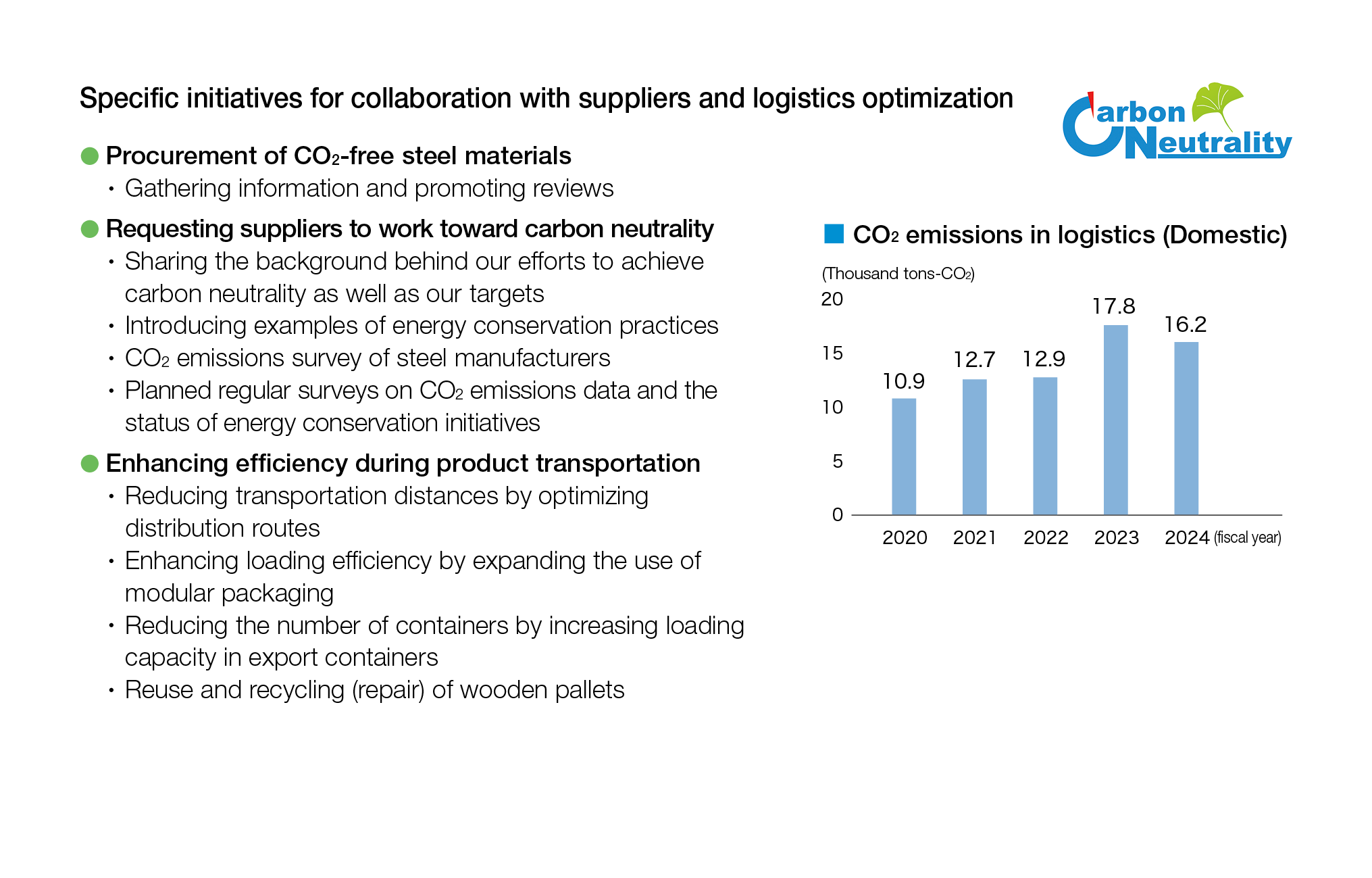
We are developing activities aimed at collaboration with our suppliers by sharing the background and goals of our carbon neutrality efforts at venues such as ESG briefings that explain our business policy, as well as introducing energy conservation practices.
Additionally, we are working to reduce CO2 emissions during product transportation by enhancing logistics efficiency, such as shortening transportation distances through optimization of logistics routes, while also gathering information and exploring the future procurement of steel materials produced using CO2-free electricity.
■Partnership with suppliers and enhancing logistical efficiency
Participation in the GX League
NTN has been participating in the ”GX League” led by the Ministry of Economy, Trade and Industry since its establishment. The ”GX League” was established in 2023 as a forum for companies aiming to achieve sustainable growth by taking on the challenge of GX (Green Transformation) in anticipation of achieving carbon neutrality by 2050 and social transformation, to collaborate with industry, government, and academia to discuss and implement initiatives for transforming the entire economic and social system and creating new markets. Full-scale activities began in 2024. Following our endorsement of the ”GX League Basic Concept” in April 2022, NTN has participated in the ”GX League” as it aligns with the direction of our carbon neutrality activities. We will further accelerate our activities toward achieving carbon neutrality and contribute to the decarbonization of society as a whole and the creation of opportunities for new economic growth by collaborating with other participating companies and organizations through the ”GX League.”
Additionally, the GX League has organized three working groups (WGs) in its ”Market Rule Formation Forum” for FY2024, and we participated as a member in one of them, the ”GX Talent Market Creation WG.” In this WG, we discussed the expansion of the GX Skill Standard Ver.1 formulated in FY2023, and solutions to challenges in promoting GX through the use of the skill standard. We will effectively utilize the knowledge gained by applying it internally, focusing on carbon neutrality activities centered on developing GX human resources.
Sustainability linked loan
To accelerate our efforts towards achieving a sustainable society through financing linked to sustainability activities, we signed a Sustainability Linked Loan agreement with The Norinchukin Bank in October 2023. With the support of The Norinchukin Bank, we developed a Sustainability-linked Finance Framework that defines requirements such as Sustainability Performance Targets (SPTs) linked to loan conditions, applicable interest rates, and reporting requirements. In this framework, we have set the achievement status of interim targets toward our decarbonization goal of achieving carbon neutrality by FY2035 (including supply chain by FY2050) as SPTs, and we will accelerate our efforts to reduce CO2 emissions with the aim of achieving these SPTs. We have also signed contracts with a total of 12 companies by December 2024, including Meiji Yasuda Life Insurance Company and The Chugoku Bank, Ltd.
Internal education
In promoting carbon neutrality activities, the participation of all employees is essential. Therefore, we are implementing internal education on carbon neutrality with the aim of further enhancing employees’ understanding and engagement. First, we had officers and employees from a wide range of occupations take the ”GX Assessment” by SkillUp NeXt to check our company’s current level of understanding of GX. Based on these results, we are establishing an internal education program. In addition, we regularly distribute Carbon Neutrality News with topics related to carbon neutrality that are familiar to employees, to deepen their understanding and interest. The news is created in both Japanese and English versions and distributed to overseas business sites as well. At overseas business sites, the news is effectively utilized by being translated into local languages and distributed to local employees.
Third-party verification opinion
We underwent a third-party verification (by SGS Japan Inc.) of our CO2 emissions for FY2024 and confirmed that there were no issues with the calculation methods for Scope 1, 2, and Scope 3 Categories 1, 2, 3, and 9.
■Third-party verification opinion
| verification opinion | (PDF: 794KB) |
|---|