Third-Party Opinion
Third-party opinion on the NTN Report 2025
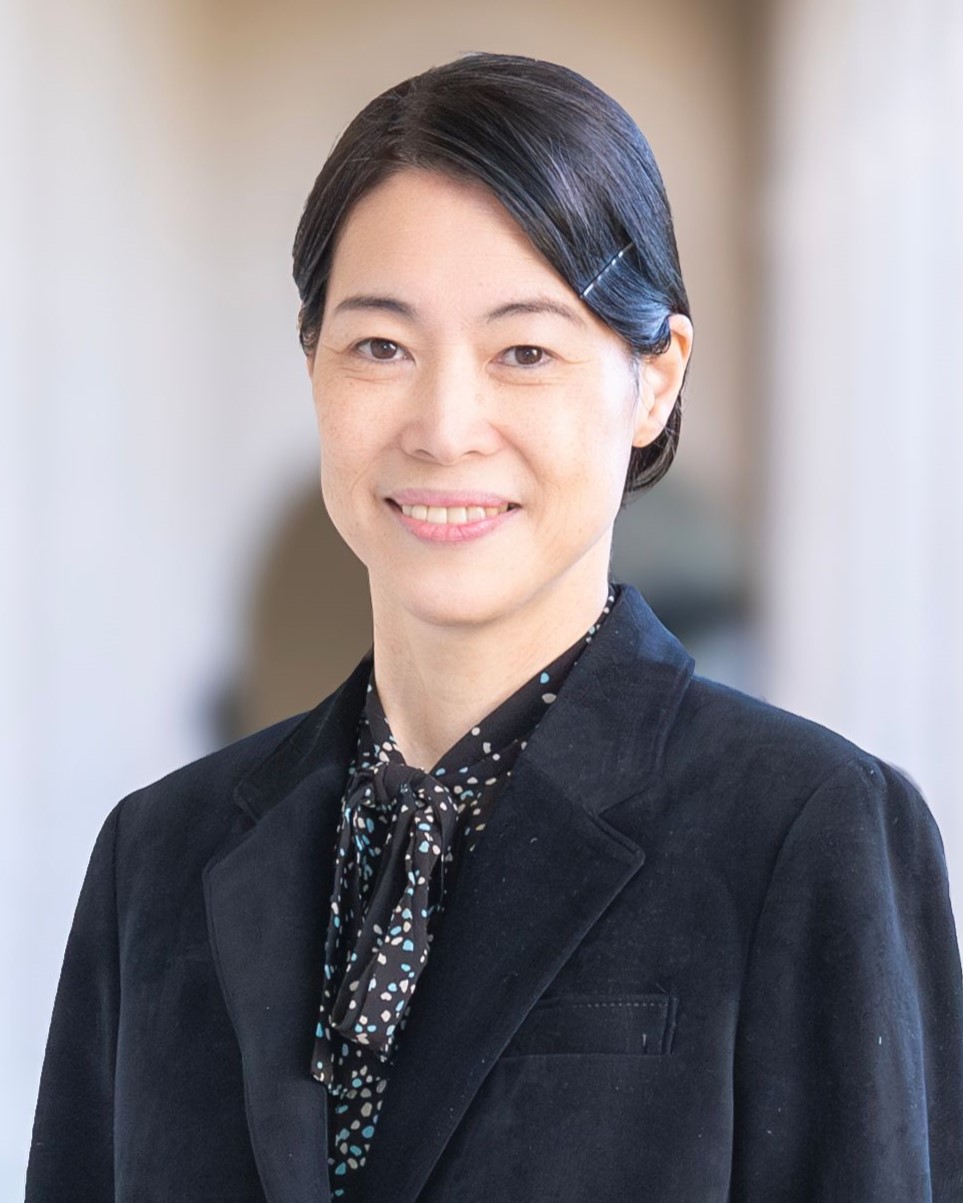
Dean, Professor, School of Business Administration, Kwansei Gakuin University
Chika Saka
Profile:
Currently serving as a member of the Sustainability Standards Board of Japan (SSBJ), expert member of the Financial System Council of Financial Services Agency (Working Group on Disclosure and Assurance of Sustainability Information, specialist group member for Assurance of Sustainability Information), member of the Business Accounting Council of Financial Services Agency, associated member of the Science Council of Japan, the Executive Director of the Accounting and Economic Association of Japan, the Executive Director of the Japan Association for International Accounting Studies, councilor of the Japan Accounting Association, member of the Japanese Institute of Certified Public Accountants, expert member of the IES Review Committee of the Continuing Professional Development Training Council under the Japanese Institute of Certified Public Accountants, member of the International Federation of Accountants (IFAC) International Panel on Accountancy Education (IPAE), among others. Co-author of ”Understanding Sustainability Standards” (Nikkei Bunko), among other publications. Recipient of the Japan Accounting Association Award, among others.
Noteworthy points in NTN Report 2025
In March 2025, the SSBJ published sustainability disclosure standards. These standards share the same perspective as NTN Report 2025 (hereinafter, ”NTN Report”), which targets capital markets. Therefore, based on the SSBJ standards, the three notable points of the NTN Report are as follows.
(1) Analysis of risks and opportunities
Under the SSBJ standards, material sustainability-related risks and opportunities are subject to disclosure. In the NTN Report, risks and opportunities are classified by business environment, with disclosure of their timing of occurrence, degree of impact, and countermeasures for each. Additionally, materiality and the Medium-term Management Plan are presented in an integrated manner, including human capital management (P.18-19). This makes visible the connections to core content, which are specific disclosure items related to risks and opportunities.
(2) Story-based core content
The NTN Report centers on a story toward value creation, with disclosure of four ”core contents” developed around this narrative.
Regarding ”governance” and ”risk management,” the report discloses company-wide integrated governance and risk management systems that include sustainability responses. Going forward, I believe the overall story of the report will be further deepened by demonstrating the relationship with ongoing structural reforms and the attitude of actively utilizing ”opportunities” to enhance corporate value, in addition to risk response.
The disclosure content corresponding to ”strategy” spans a wide range of areas, including the long-term vision in ”Our Story” (P.21), strategies supporting transformation (P.22), business strategies (P.32, 36), the roadmap in ”Co-creation with Stakeholders” (P.45), and human resource strategy (P.53). In particular, by considering the impact of risks and opportunities (P.18–19) on business models and value chains, their impact on strategy and decision-making, and even resilience perspectives, this is expected to lead to supply chain strengthening in response to sustainability challenges, as well as business structure transformation and business model reinforcement.
From the ”metrics and targets” and their results (P.20, 54, 78), it can be seen that FY2024 targets have been steadily achieved. Additionally, future directions are specifically indicated, including roadmaps for measures toward CO2 emissions reduction.
(3) Initiatives for water resources and biodiversity
In the NTN Report, initiatives for water resource management and biodiversity conservation, which are attracting attention as the next themes of sustainability disclosure standards, have been newly disclosed (p.51). The report introduces initiatives such as water risk management based on water stress analysis and the construction of reuse systems in areas with high water stress. Additionally, the identification of business sites with high risk from a biodiversity perspective and the advancement of specific countermeasures can be said to contribute to the transformation to sustainable and resilient business models.
Management changes brought about by sustainability standards
Disclosure has the power to change corporate behavior. For example, information disclosure related to value chains, such as Scope 3 CO2 emissions, leads to supply chain reviews. This simultaneously becomes an opportunity to discover new business opportunities. Collaboration beyond the framework of corporate groups is essential for achieving carbon neutrality, and sustainability disclosure standards provide an opportunity to review business approaches across the entire value chain.
What these standards require is the reconstruction of strategies and business models that maximize revenue opportunities while controlling sustainability-related risks. By enhancing both economic value and sustainability value, I expect NTN will further strengthen its competitiveness and contribute significantly to the realization of a sustainable economic society.
Response to third-party opinion
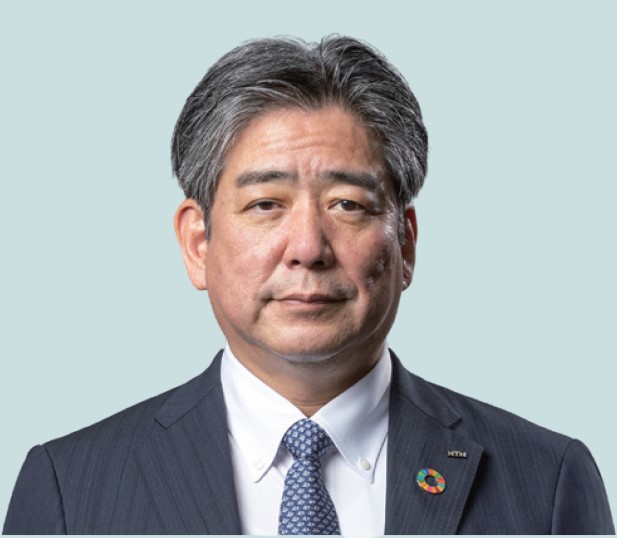
ESG Promotion Department
Tsuyoshi Kikuta
We express our sincere gratitude to Professor Saka for providing us with valuable insights.
As the momentum for expanding sustainability information disclosure accelerates both domestically and internationally, our company is also preparing future-oriented information disclosures. Under these circumstances, we are greatly honored that you evaluated the relevance between the four core contents of SSBJ’s Sustainability Disclosure Standards and our company’s disclosure information. Furthermore, your comments on water resource management and biodiversity conservation serve as encouragement for our progress toward realizing a ”NAMERAKA Society” that our company aims for, providing us with great motivation. Moreover, your words that ”disclosure has the power to change corporate behavior” resonate deeply with us. Your advice that information disclosure will lead to supply chain reviews while simultaneously creating opportunities to discover new business chances greatly enhances the motivation of each and every employee involved in producing the NTN Report.
We shall continue to engage in information disclosure that combines transparency and effectiveness, and strive for medium- to long-term improvement of corporate value.