Resource Recycling and Pollution Prevention
Resource recycling initiatives
NTN Group promotes initiatives toward achieving a circular economy so that our finite resources have a future.
We strive to reduce waste and achieve efficient utilization of raw materials and water, by fully implementing the 3Rs (reduce, reuse, recycle).
We also impose strict control of chemicals used in products and manufacturing processes, and actively promote conversion to alternatives to substances subject to Japan’s Pollutant Release and Transfer Registers (PRTR) Act.
NTN sets annual targets for waste generation control, maintenance of high recycling rates, and reduction of the volume of chemical substances used, and engages in continuous improvement.
Material balance
The NTN Group is working to reduce environmental impact in its business activities. As part of this effort, we have introduced the concept of ”material balance,” which involves understanding and analyzing energy and resource inputs (inputs) and environmental impacts such as waste and CO2 emissions (outputs). Through this approach, we are promoting the circular use of resources, waste reduction, and energy conservation to achieve harmony with the environment.
■Material balance of business activities (FY2024) [Global]
INPUT
| FY | 2022 | 2023 | 2024 | |||
|---|---|---|---|---|---|---|
| Raw material procurement | Materials | |||||
| Steel | 56.8 | 56.0 | 46.7 | Ten thousand tons | ||
| Recycled steel usage rate (Japan)*1 | - | - | 53 | % | ||
| Resin materials, grease, etc. | 1.5 | 1.6 | 1.6 | Ten thousand tons | ||
|
Development and design Forging and turning Heat treatment Grinding and polishing Assembly |
Energy conversion value | 5,922 | 5,746 | 5,701 | TJ*2 | |
| Fuel | 1,363 | 1,294 | 1,512 | TJ*2 | ||
| Electricity | 4,512 | 4,019 | 3,736 | TJ*2 | ||
| Renewable energy and natural energy | 47 | 433 | 454 | TJ*2 | ||
| Energy consumption (fuel) | ||||||
| Fuel consumption | Gasoline | 56 | 46 | 33 | Thousand liters | |
| Kerosene | 521 | 544 | 464 | Thousand liters | ||
| Diesel oil | 390 | 342 | 343 | Thousand liters | ||
| Heavy oil A | 139 | 89 | 169 | Thousand liters | ||
| LPG | 12,012 | 11,175 | 10,230 | Tons | ||
| City gas (Japan) | 27,683 | 8,767 | 8,547 | Thousand ㎥ | ||
| Natural gas (Overseas) | - | 17,768 | 16,133 | Thousand ㎥ | ||
| Energy consumption (electricity) | 1,266 | 1,236 | 1,164 | GWh | ||
| Electricity purchased | 1,240 | 1,116 | 1,038 | GWh | ||
| Electricity purchased (renewable energy) | 12 | 106 | 109 | GWh | ||
| Natural energy generation | 13 | 14 | 17 | GWh | ||
| Percentage of renewable and Natural energy use | 2 | 10 | 11 | % | ||
| Water consumption | 284.8 | 283.1 | 280.2 | Ten thousand ㎥ | ||
| Groundwater | 96 | 97 | 108 | Ten thousand ㎥ | ||
| Tap water | 164 | 162 | 158 | Ten thousand ㎥ | ||
| Industrial water | 24 | 23 | 13 | Ten thousand ㎥ | ||
| Recycled water | 0.6 | 0.4 | 1.0 | Ten thousand ㎥ | ||
| PRTR Act target chemical substances input volume (Japan) | 71 | 8,145 | 8,480 | Tons | ||
| Logistics | Transportation volume cargo weight × distance (Japan) | 8,677 | 110,947 | 100,571 | Ten thousand tons/km | |
OUTPUT
| FY | 2022 | 2023 | 2024 | |||
|---|---|---|---|---|---|---|
| Raw material procurement | CO2 emissions (Scope 3, Category 1) (Japan) | 201 | 219 | 199 | Ten thousand tons | |
|
Development and design Forging and turning Heat treatment Grinding and polishing Assembly |
CO2 emissions (Scope 1 and 2) *3 | 56 | 54 | 47 | Ten thousand tons | |
| CO2 emissions (Scope 1) | 10 | 9 | 8 | Ten thousand tons | ||
| CO2 emissions (Scope 2): Market-based*3 | 46 | 45 | 38 | Ten thousand tons | ||
| CO2 emissions (Scope 2): Location-based (reference value) | 48 | 47 | 43 | Ten thousand tons | ||
| Harmful air pollutants (Japan) | ||||||
| VOC | 546 | 486 | 385 | Kilograms | ||
| NOx | 41.0 | 37.4 | 36.3 | Tons | ||
| SOx | 10.0 | 9.1 | 8.8 | Tons | ||
| Wastewater volume | 225 | 226 | 224 | Ten thousand ㎥ | ||
| Rivers | 214 | 214 | 213 | Ten thousand ㎥ | ||
| Sewerage | 11 | 12 | 11 | Ten thousand ㎥ | ||
| Water pollutants (Japan)*4 | ||||||
| BOD | 1,534 | 1,636 | 1,317 | Kilograms | ||
| Nitrogen compounds | 3,306 | 3,452 | 2,930 | Kilograms | ||
| Phosphorus compounds | 396 | 389 | 336 | Kilograms | ||
| PRTR Act target chemical substances discharge and transfer volumes (Japan) | 19 | 113 | 96 | Tons | ||
| Waste generated | 162,598 | 163,584 | 145,645 | Tons | ||
| Final landfill disposal volume | 4,599 | 4,897 | 4,703 | Tons | ||
| Valuable materials | 39,545 | 37,547 | 32,303 | Tons | ||
| In-house recycling | 466 | 548 | 381 | Tons | ||
| Recycling volume | 157,999 | 158,687 | 140,943 | Tons | ||
| Recycling rate | 97.2 | 97.0 | 96.8 | % | ||
| Logistics | CO2 emissions (Scope 3, Category 9) (Japan) | 1.3 | 1.8 | 1.6 | Ten thousand tons | |
*1 Applies to domestic sites, primarily targeting electric furnace materials made from iron scrap. Data aggregation began in 2024.
*2 For electricity energy, we use the physical quantity of 3.6MJ/kWh. For fuel energy, we use the emission factors listed in the ”Emissions Unit Values Database for Accounting of Greenhouse Gas Emissions, etc., by Organizations Throughout the Supply Chain (Version 3.3)” published by the Ministry of the Environment.
*3 For domestic business sites, we use ”Electric Utility Emission Factors (Ministry of the Environment and Ministry of Economy, Trade and Industry)”. For overseas business sites, we use emission factors from ”Emissions Factors (IEA)”
*4 Limited to manufacturing sites that discharge wastewater into public water bodies.
Water resource management initiatives
The NTN Group considers water resource conservation to be an important issue and aims for sustainable water resource management. Specifically, we are conducting the following initiatives.
■Initiatives for sustainable water resource management
| Item | Initiatives |
|---|---|
| Introduction of water-saving technologies | We introduce the latest water-saving technologies to achieve efficient water use. |
| Water quality management | We strictly manage the quality of wastewater to minimize environmental impact. |
| Cooperation with local communities | We cooperate with local communities to promote water resource conservation activities. |
■Initiatives for efficient water resource management
| Item | Initiatives |
|---|---|
| Water intake management | We appropriately manage water intake to prevent wasteful use. |
| Reducing wastewater volume | We improve the efficiency of wastewater treatment facilities to reduce wastewater volume. |
| Reuse of water resources | We actively utilize reusable water resources to reduce overall water consumption. |
Through these initiatives, we will realize sustainable water resource management and contribute to environmental conservation.
Reducing water consumption
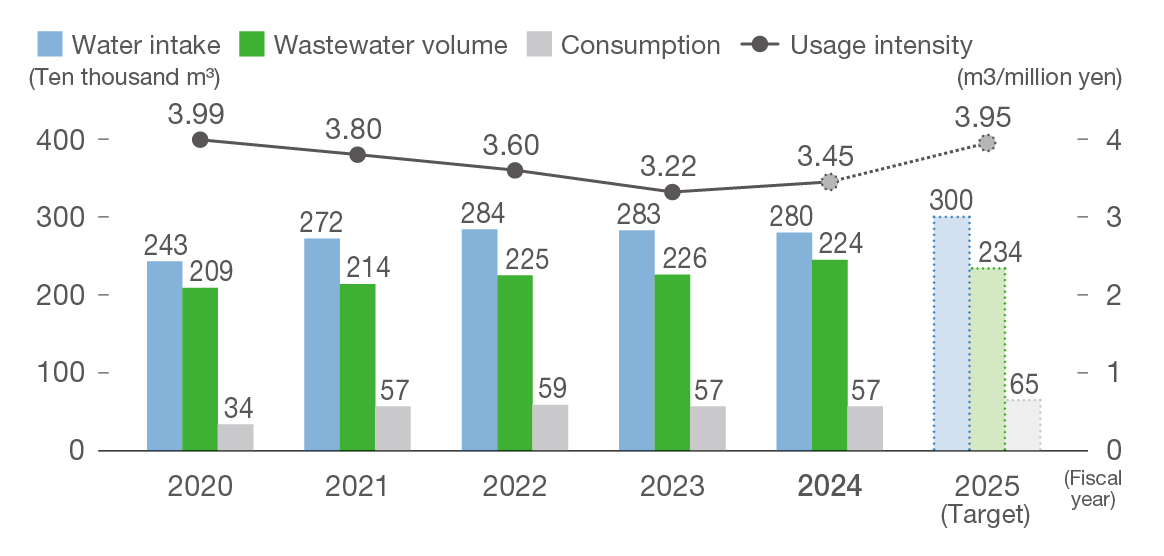
Water consumption intensity for fiscal year 2024 was 3.45 ㎥/million yen globally, achieving our target of 3.8 ㎥/million yen. We will continue to aim for further reduction of water consumption intensity in fiscal year 2025.
■Water consumption and Usage intensity (FY2024)
Water stress analysis and Sustainable water resource management
The NTN Group conducts water stress analysis using the Aqueduct, a tool provided by the World Resources Institute (WRI), and utilizes it for managing water risks such as water resource depletion. Through this approach, we understand future water stress conditions and promote sustainable water resource management. We also regularly evaluate water stress conditions to identify high-risk business sites.
We recognize India as a region with high water risk, and are implementing the following specific actions:
- Introducing efficient water utilization technologies and establishing recycling systems to reduce water consumption.
- Cooperating with local communities to jointly implement water resource protection activities.
- Regularly monitoring water stress conditions and reviewing countermeasures, as necessary.
We will continue to predict and evaluate water risks and work to reduce business continuity risks.
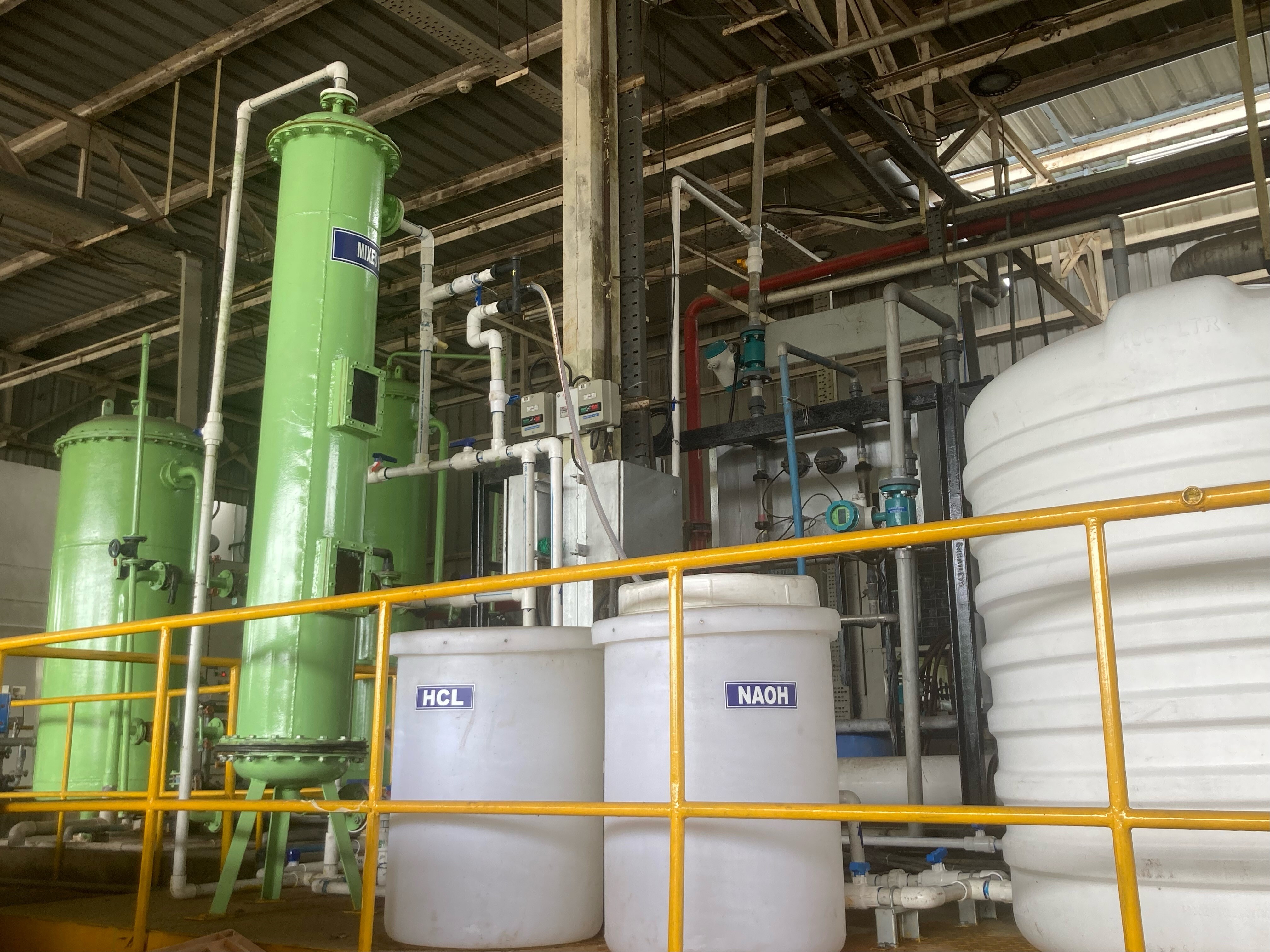
■Dual media filtration water treatment tanks and reverse osmosis membrane treatment facilities (NNMI,India)
Water risk countermeasures and Technology introduction in India
In our global business operations, among the NTN Group companies, the Bawal and Chennai plants of NTN NEI Manufacturing India Private Limited (NNMI,India) in India face particularly high water risks. At the Chennai plant in particular, due to severe water shortages during the summer, water is purchased by tanker trucks and treated using reverse osmosis (RO) water treatment systems.
To address this situation, we are introducing efficient water utilization technologies and establishing reuse systems to reduce water consumption. Additionally, we are considering the introduction of rainwater collection systems and water reuse systems while strengthening employee education on water use to mitigate water risks. We also implement water resource protection activities in cooperation with local communities, regularly monitoring water stress conditions and reviewing countermeasures as necessary.
In fiscal year 2024, we implemented various water management activities to minimize environmental impact. At the Chennai plant, the average daily water consumption is 35 kiloliters, classified into utility water and manufacturing water. For utility water, we introduced Zerodor Waterless Urinal Technology to reduce toilet water consumption and installed push-cock faucets for handwashing. Furthermore, we utilize STP treated water (water treated at sewage treatment plants) for gardens.
Through these initiatives, the Chennai plant is steadily advancing water consumption reduction and effective utilization of water resources.
Waste reduction and Maintaining high recycling rates
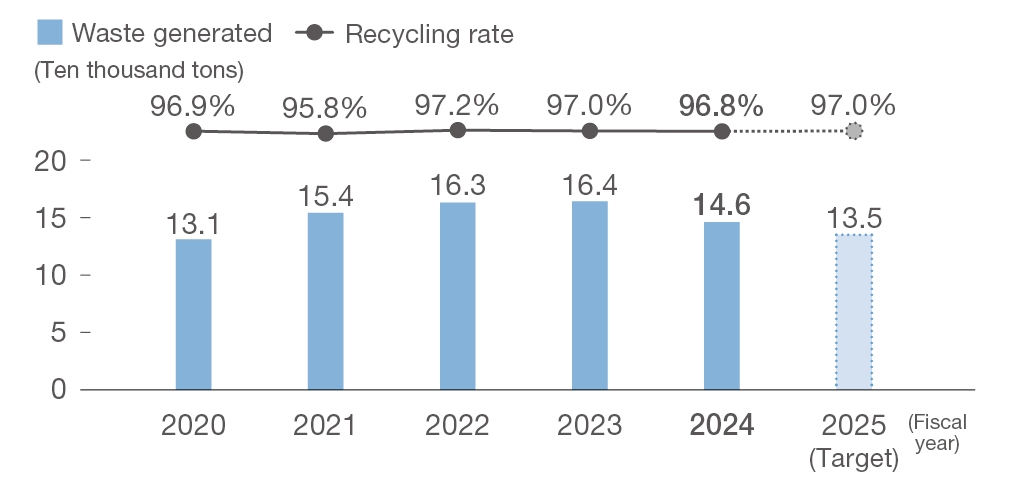
In fiscal year 2024, we worked on improving the recycling rate and achieved the global target of 96.0%. In fiscal year 2025, we will continue with efforts to minimize the volume of waste generated, and work toward achieving our target recycling rate, taking the reduction of waste generated and maintenance of high recycling rate as our indicators.
■Waste generated and Recycling rate (FY2024)
Solidification of sludge generated in Grinding processes
The NTN Group has developed grinding sludge solidification equipment and introduced it within the Group, as well as selling it to external parties. Sludge discharged during the grinding process of metal components contains a large amount of coolant liquid in addition to metals. However, the introduction of this equipment can realize material recycling by separating the coolant liquid and compressing the sludge into solids with a high metal content. Furthermore, the separated coolant liquid is filtered within the equipment and reused. In fiscal year 2024, we recycled 4,899 tons of solidified grinding sludge.
■Grinding sludge solidification equipment results (FY2024)
| Units in operation | Recycled weight (tons/year) | |
|---|---|---|
| Domestic business sites | 54 | 3,157 |
| Overseas business sites | 13 | 1,742 |
| Total | 67 | 4,899 |
Reducing packaging materials
To reduce the use of disposable plastics, the NTN Group is considering the use of returnable packaging, as well as switching to simple packaging, upon consultation with customers. We will continue to consider alternatives for packaging materials where substitution is possible while ensuring product quality.
Initiatives for packaging material reduction in India
At NTN NEI Manufacturing India Private Limited (NNMI, India), we are working on reducing packaging materials with the aim of reducing environmental impact and effectively utilizing resources.
Specifically, we reviewed the use of cardboard boxes and wooden pallets designed for single use and adopted the use of polypropylene returnable boxes. This initiative is expected to reduce the disposal volume of cardboard boxes and wooden pallets by approximately 9.6 tons annually. Additionally, the polypropylene returnable boxes have a service life of 5 years and can be double-stacked, contributing to the optimization of raw material layout areas.
Going forward, we plan to discuss with other suppliers and deploy the use of polypropylene returnable boxes horizontally.
Reducing plastic waste
The NTN Group is strengthening initiatives to reduce plastic waste. Through improving recycling technologies and proper waste treatment, we aim to reduce environmental impact and realize a better environment and lifestyle.
Response to the plastic resource circulation act
To respond to the Plastic Resource Circulation Act, the NTN Group is strengthening cooperation throughout the supply chain to reduce plastic usage and promote recycling. Specifically, we are working on creating mechanisms to promote circular resource utilization through product design reviews, recycling system development, technology development, and information sharing. We also promote environmental awareness and behavioral change through employee education and activities to enhance understanding of important environmental measures. Through these efforts, we contribute to achieving both effective resource utilization and environmental conservation.
Reuse of production by-products
Rather than directly disposing of production by-products such as coolant generated during production, the NTN Group is discussing operational improvements and regeneration possibilities with external contractors to promote reuse. For example, we are advancing initiatives to regenerate used coolant through filtration and refining processes for reuse in production processes. Through this approach, we are reducing waste and effectively utilizing resources.
Mineral waste recycling business
At NTN CASTING Corporation (Japan), we launched a mineral waste recycling business through public-private cooperation with full support from Shimane Prefecture in fiscal year 2021. The mineral waste, which was previously disposed of in landfills, was verified using testing equipment to meet recycling standards and became mineral waste that can be utilized as roadbed material and embankment material for development sites.
Currently, with the newly introduced insolubilization treatment equipment, we achieved a 100% recycling rate in fiscal year 2024, advancing our zero-emission initiatives.
We will continue to work on reducing environmental impact and promoting resource circulation in cooperation with local communities and related organizations.
Efforts to prevent pollution (Reducing environmental impact in business activities)
The NTN Group strives to reduce environmental impact associated with business activities through exhaust gas reduction utilizing the latest environmental technologies, water pollution prevention measures including circular water utilization systems, soil contamination countermeasures through regular soil inspection and chemical substance management, recycling activities promoting waste reuse in manufacturing processes, and employee environmental education and community awareness activities.
Current status and Countermeasures for air pollution
Air pollution is becoming a serious global environmental issue. The NTN Group contributes to improving air quality by promoting exhaust gas reduction and the introduction of clean energy.
Italy strengthens air pollution control with the latest suction system
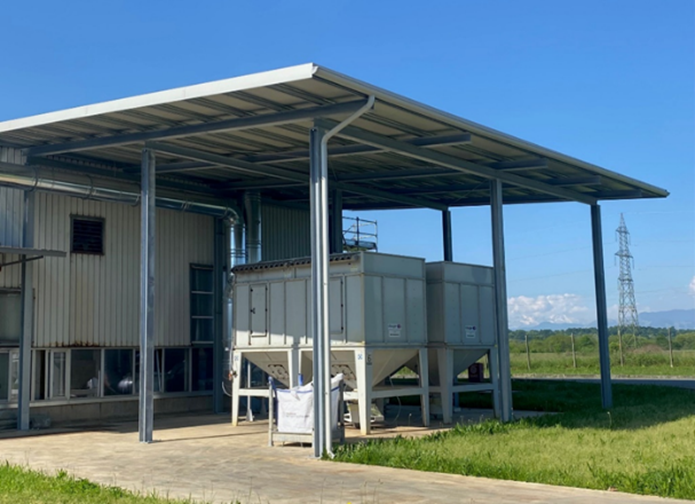
At ICSA INDUSTRIA CUSCINETTI S.P.A. (NTN-SNR ICSA, Italy), we introduced the latest suction system as a countermeasure against air pollution. This system aims to reduce smoke levels in three lines of the heat treatment area and improve the quality of discharged air.
In 2024, we replaced three conventional small suction systems (4,000 cubic meters per hour each) with a large suction system with a total flow rate of 12,000 cubic meters per hour. In the new system, we expanded the exhaust pipe diameter from 0.3 meters to 0.5 meters and increased the number of filter socks from 96 to 440, significantly improving suction efficiency.
As a result, smoke levels in the heat treatment area were improved, and laboratory analysis confirmed the reduction of pollutants released into the atmosphere. Going forward, we plan to regularly monitor the emission of pollutants into the atmosphere to maintain this improvement.
■New suction system with expanded exhaust pipe diameter (NTN-SNR ICSA)
Response to the Fluorocarbons Emission Restraining Law
Based on the Fluorocarbons Emission Restraining Law (Act on Rationalization of Use and Proper Management of Fluorocarbons), the domestic group manages the leakage volume of alternative fluorocarbons (HCFC and HFC) and records of inspections and maintenance performed for refrigeration equipment and cleaning solvents for machine parts subject to the law. The leakage volume for the entire domestic group in fiscal year 2024 was 1,028 tons-CO2e (NTN alone: 820 tons-CO2e). Going forward, we will strengthen management systems according to the scale of business sites and promote switching to refrigeration equipment and cleaning solvents for machine parts that do not use R22 (HCFC-22), which is a primary subject of the law, while actively considering the introduction of non-fluorocarbon equipment that does not use alternative fluorocarbons.
Addressing water pollution
Water pollution has significant impacts on ecosystems. The NTN Group strives to maintain clean water environments through innovation in wastewater treatment technology and thorough water quality management.
Strengthening water pollution prevention with latest technology
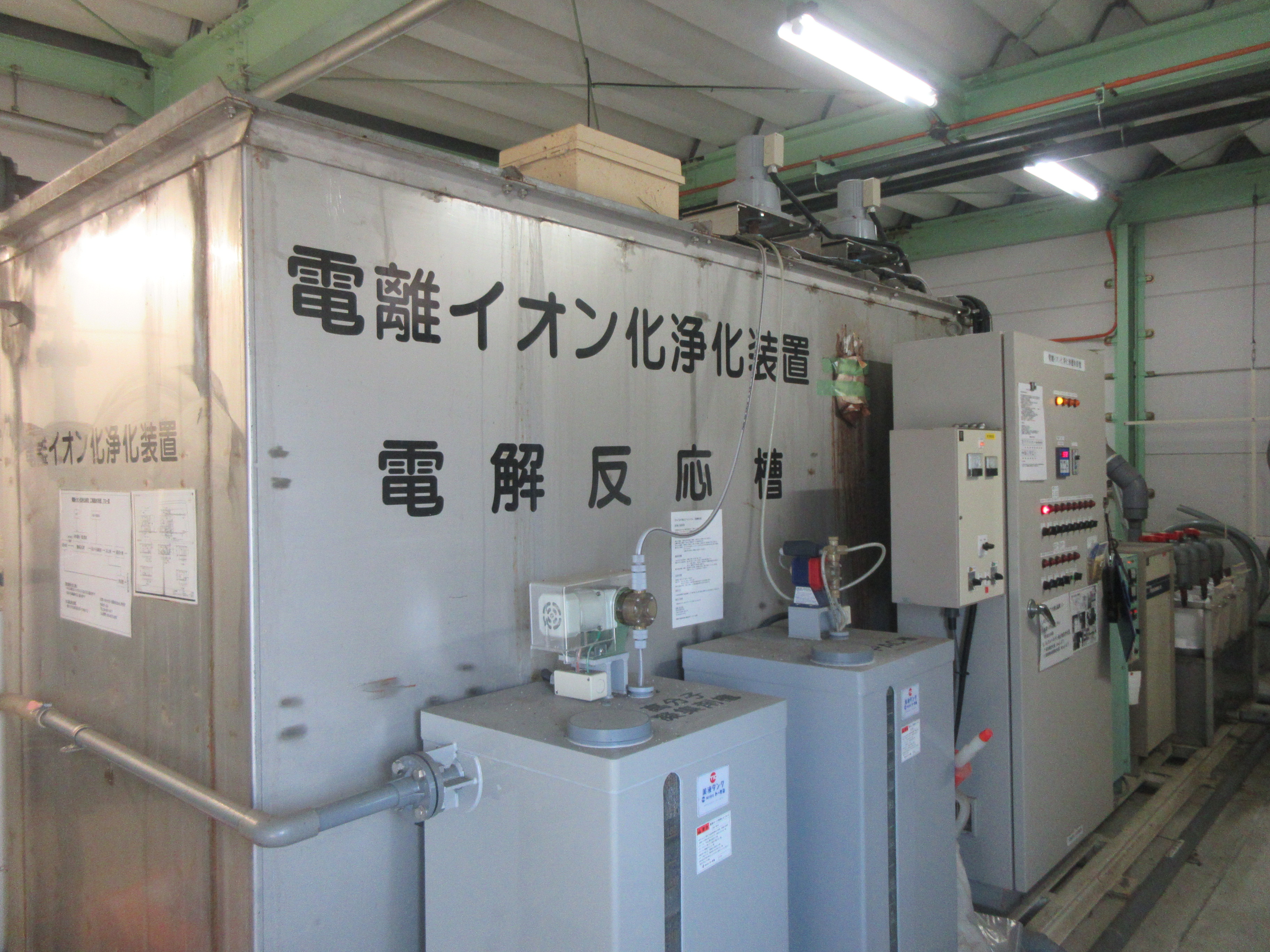
At NTN Akaiwa Corporation (Japan), we prioritize environmental considerations and introduced the latest ionization purification system at the time of completion. This system efficiently separates oil components by applying electricity to wastewater and removes floating sludge by rotating pressurized water in the flotation layer. We conduct regular maintenance annually to wash away sludge and maintain the system’s performance, strictly adhering to wastewater standard values. We also operate thoroughly in accordance with legal regulations.
Through these initiatives, Akaiwa Corporation maintains wastewater quality within standard values and minimizes environmental impact.
■Ionization purification system (Akaiwa Corporation)
Impact of noise pollution and Prevention
Noise pollution adversely affects people’s health and quality of life. The NTN Group aims to provide quiet environments through the development and application of noise reduction technologies.
China: Installation of sound barriers as part of noise pollution countermeasures
In China, noise pollution has become a serious problem, particularly in urban areas, with noise levels exceeding standard values in many urban living areas and increasing complaints from residents. The Chinese government has revised the Law of the People’s Republic of China on the Prevention and Control of Noise Pollution to strengthen noise pollution prevention. Accordingly, the market for reducing traffic noise and factory noise is expanding, and technological development is also advancing.
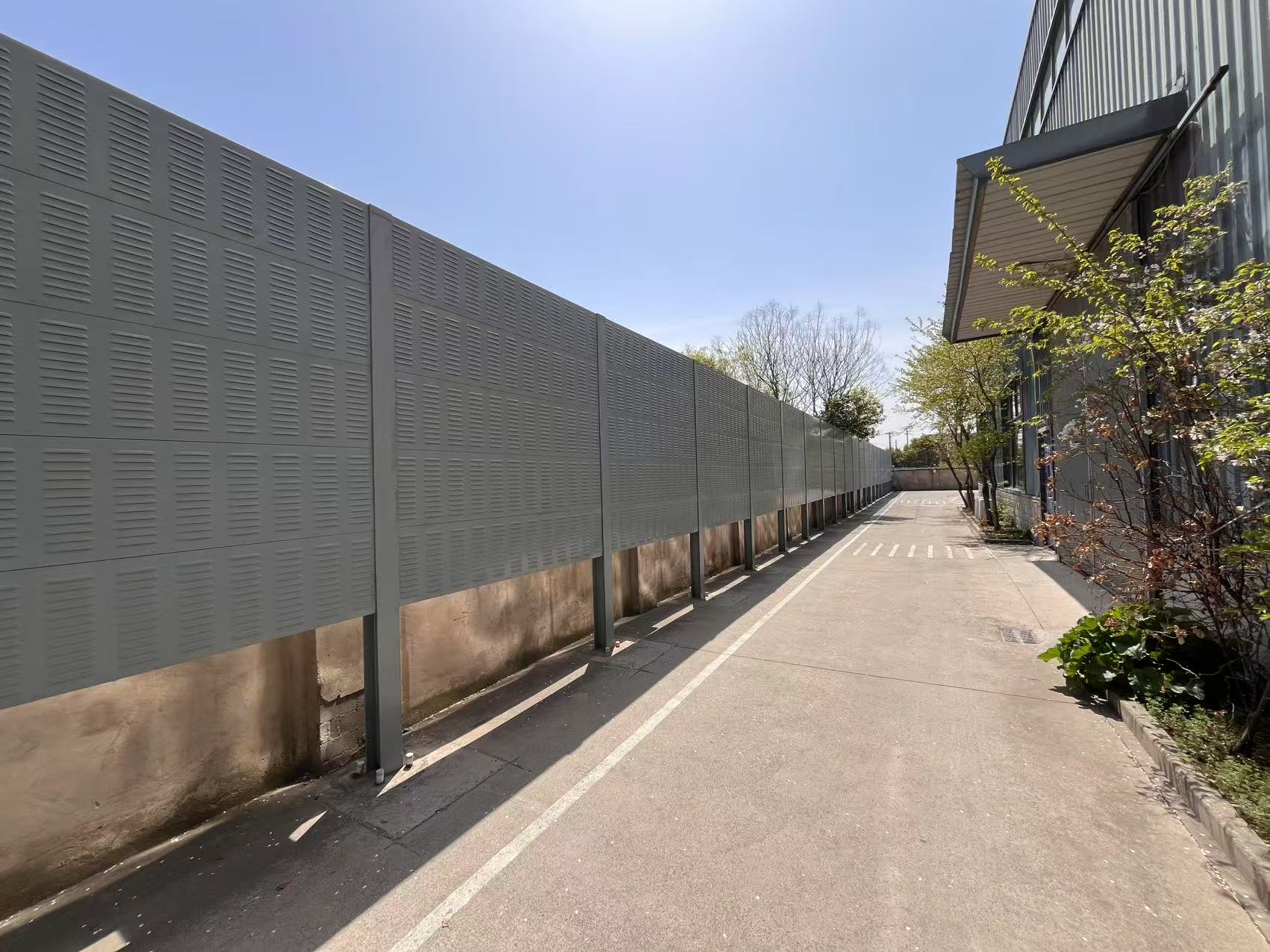
Against this background, NTN-RAB (Changzhou) Corporation (NTN-RAB, China) installed sound barriers to reduce noise from the factory. These sound barriers are 3.5 meters high and 86 meters long, installed within the factory premises to suppress the impact of noise on surrounding residences. As a result, noise levels decreased after installation compared to before, meeting the standards for areas where residences and factories coexist (60 decibels or less during the day, 50 decibels or less at night). Currently, we meet the standard values, but we will consider additional measures as necessary.
■Sound barriers to suppress noise pollution (NTN-RAB)
Reducing handling volume of Chemical substances subject to the PRTR Act
The NTN Group is working to understand and reduce the usage volume of chemical substances subject to the PRTR Act (Act on Confirmation, etc. of Release Amounts of Specific Chemical Substances in the Environment and Promotion of Improvements to the Management Thereof) among chemical substances handled in domestic manufacturing processes. Due to legal revisions in April 2023, the number of chemical substances subject to the PRTR Act increased to 515 substances (including 23 specified Class I substances). In fiscal year 2024, we identified target procurement items, collected SDS, and calculated the handling volume of target chemical substances. For the 8 substances with particularly high handling volumes (see table), we are working on substitution with raw materials using substances with lower toxicity. Through this approach, we will further strengthen our environmental conservation efforts and fulfill our responsibilities to local communities.
■Amount of PRTR Chemicals handled (FY2024)
| Substance name | All substances | When substances contained in steel materials and other substances are separated | ||
|---|---|---|---|---|
| Handling volume (tons) | % | Handling volume (tons) | % | |
| Chromium and trivalent chromium compounds* | 3,706 | 43.7% | 3,706 | 44.6% |
| Manganese and its compounds* | 1,960 | 23.1% | 1,960 | 23.6% |
| Nickel* | 1,466 | 17.3% | 1,466 | 17.6% |
| Molybdenum and its compounds* | 1,182 | 13.9% | 1,182 | 14.2% |
| 0 | 8,313 | 100.0% | ||
| Diethanolamine | 39 | 0.5% | 39 | 23.2% |
| Boron compounds | 28 | 0.3% | 28 | 16.9% |
| Silicon Carbide (SiC) | 20 | 0.2% | 20 | 12.1% |
| Xylene | 15 | 0.2% | 15 | 9.0% |
| Trimethylbenzene | 15 | 0.2% | 15 | 8.7% |
| Water-soluble zinc compounds | 11 | 0.1% | 11 | 6.5% |
| Hexahydro-1,3,5-tris(2-hydroxyethyl)-1,3,5-triazine | 11 | 0.1% | 11 | 6.5% |
| Sulfide (2,4,4-trimethylpentene) | 9 | 0.1% | 9 | 5.4% |
| Others | 19 | 0.2% | 19 | 11.6% |
| Total | 8,480 | 100.0% | 167 | 100.0% |
*Substances contained in steel
Management of hazardous waste and Other waste, and Management of transportation and Disposal contractors
The NTN Group disposes of waste generated at its business sites in accordance with the laws and regulations of each country, and the Japanese group companies dispose of waste in compliance with the “Waste Disposal and Public Cleansing Law” (Waste Disposal Law). In fiscal year 2024, the volume of specially controlled waste, which is waste that is particularly hazardous, was 569 tons. We will continue to ensure that all waste, including specially controlled waste, is properly disposed of in accordance with laws and regulations, and will thoroughly manage the outsourcing of transportation and disposal to licensed contractors.
Response to the PCB Special Measures Act
In accordance with the Law Concerning Special Measures against PCBs*, The NTN Group in Japan has been promoting the identification and management of equipment containing PCBs and the reliable implementation of systematic disposal. We are currently continuing to investigate equipment containing low concentrations of PCBs and aim to complete disposal of all such equipment one year ahead of the statutory deadline of the end of March 2027.
Toward this target, we are steadily proceeding with ledger organization and on-site confirmation in collaboration with each facility, and are also working to identify equipment subject to treatment and improve the accuracy of disposal plans. Going forward, we will continue to prioritize compliance with laws and regulations above all else, and strive to reduce environmental impact and fulfill our social responsibilities.