CSR activities in FY2023
Relationships with Customers
Quality assurance system
As efforts to achieve carbon neutrality accelerate worldwide, customer needs for lower torque to reduce energy loss, extended product life, and lighter-weight products are increasing more and more. To ensure that customers are satisfied when using our products, it is essential to respond flexibly to their requirements, and build trusting relationships. We strive to maintain and improve product quality globally in accordance with our Quality Policy, which serves as the basic philosophy for all of our “monozukuri” (manufacturing) activities, in order to create quality that satisfies our customers.
Quality Policy
■Pursuing right quality to meet functions and specifications requested by our customers.
-
Applicable quality
Our quality should immediately respond to the change of our customers’ requirements. -
Competitive quality
We have to win quality competition. -
Quality for economy
Quality should benefit our company.
Quality Management Policy
The Quality Management Policy, comprising quality targets and measures for achieving these targets, is established every fiscal year under the direction of top management and communicated to the entire company. Based on the results of quality performance, such as claims and failure costs from the previous fiscal year, we plan measures for the current fiscal year and reflect them in this policy. In addition, each business site establishes an action plan based on this Quality Management Policy and monitors the progress of activities toward the established quality targets on a monthly basis.
The Quality Management Policy for FY2024 describes the following main measures: “Establishing a change-resistant quality assurance system,” “Strengthening the management of special processes whose failure can easily lead to critical claims,” “Establishing a crisis management system for emergencies,” and “Developing human resources with strong quality skills”. By promoting each measure under the quality slogan “Quality is our future,” we aim to build quality that is trusted by our customers.
Quality slogan

Quality management system
Organization
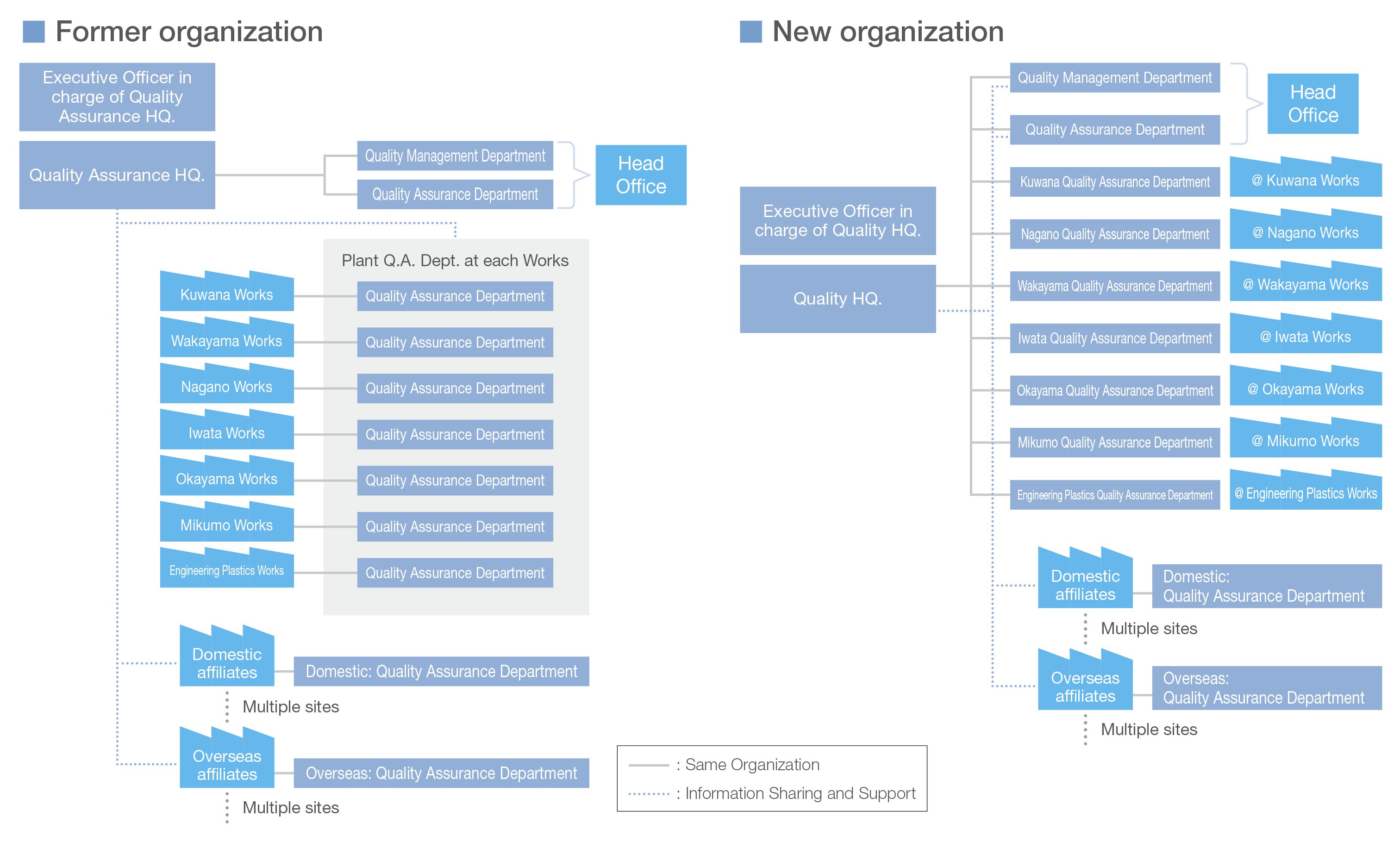
Since FY2024, we have integrated the structure of our quality organizations to strengthen our quality assurance system (refer to the figure below).
The Quality Headquarters has been reorganized to directly supervise and oversee the Quality Assurance Departments of each Works in order to centralize the monitoring of quality issues and their control systems, strengthen the promotion of standardization, and develop quality specialists.
Status of acquisition of IATF16949/ISO9001 certifications
In order to improve customer satisfaction and provide consistent products and services, the Group’s domestic and overseas manufacturing sites have acquired ISO9001 certification, which is an international management system standard. New businesses and newly established production plants worked on acquiring certifications and we have now achieved a 100% certification acquisition rate for our quality management system, including domestic and overseas consolidated subsidiaries engaged in manufacturing.
We have also acquired IATF16949 certification, a standard for the automotive industry, and JIS Q 9100 and Nadcap, standards for the aerospace industry, as well as CRCC (China) certification for the railway industry.
Efforts to improve quality
Ensuring stable quality
When implementing new developments and process changes, risk assessment is performed using a risk analysis sheet to strengthen control. Risk assessment involves a cross-functional approach, with each department participating in the verification and evaluation from its respective perspective to identify and prevent quality risks at an early stage. This ensures that reliable quality is built into the manufacturing process and helps to secure stable quality.
We also review the risk of potential quality issues and assess the effectiveness of preventive measures by promoting quality audits at manufacturing sites (including suppliers), globally deploying check sheets that summarize the key points of quality control, and collecting the respective inspection results. For managing quality information, we use our quality information management system (G-QUICK), which centrally manages customer complaints and claims on a global basis, to distribute information immediately to the relevant departments for early problem solving.
Developing human resources with strong quality skills
To enhance employees’ knowledge and awareness of quality, we conduct specialized quality education such as basic and advanced QC (quality control) courses. These training sessions use past claims as specific examples to illustrate the negative impact on customers, thereby emphasizing the importance of quality. Additionally, specialized quality training is provided for supervisors involved in manufacturing, serving as an opportunity to reinforce their response capabilities to quality issues and deepen their understanding of their roles and responsibilities in quality control.
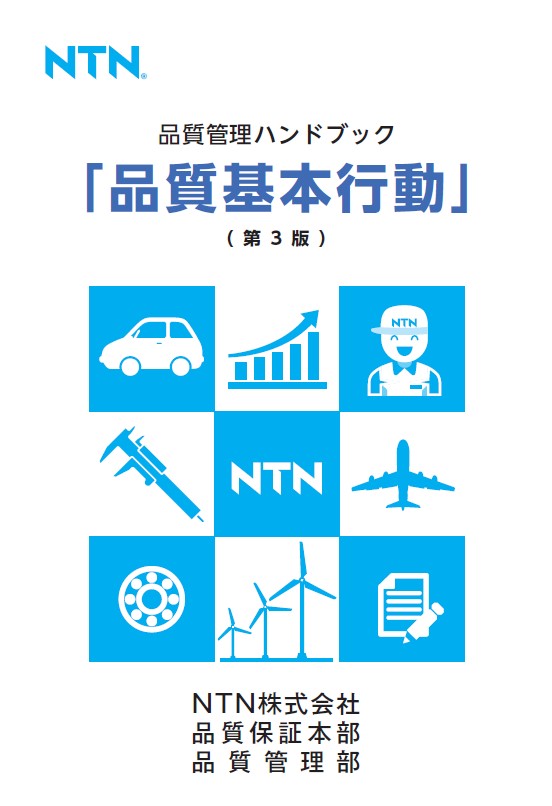
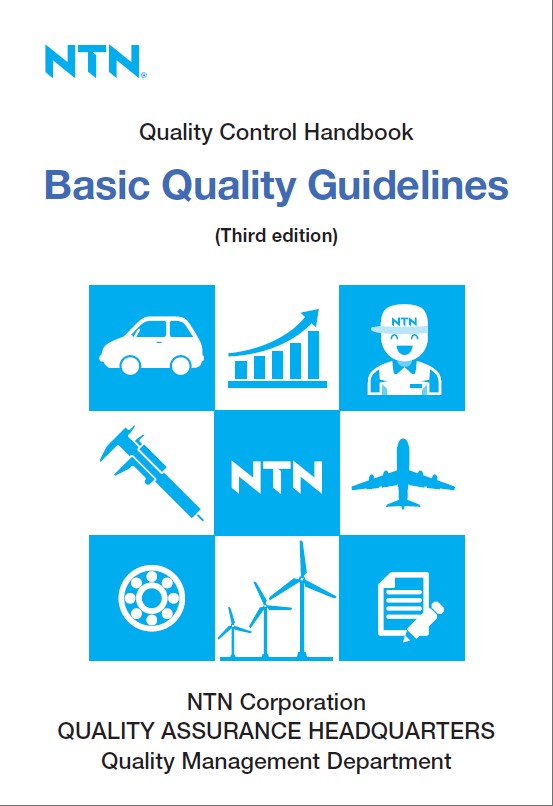
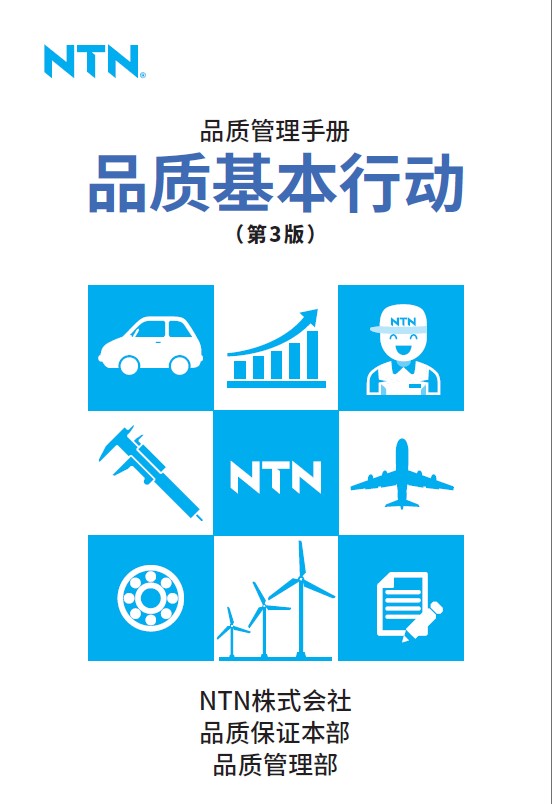
In March 2023, we published the third edition of “Quality Control Handbook: Basic Quality Guidelines,” which describes NTN’s approach to quality and the basic actions to secure quality. This Handbook is used not only in the training of new employees, but also carried around by employees, allowing them to verify their actions at any time and helping to raise their awareness of quality. The Handbook has been translated into English, Chinese, French, and other languages, and will be distributed to overseas affiliates and suppliers to ensure its global availability.
■Japanese, English, and Chinese versions of the Quality Control Handbook
Quality Month
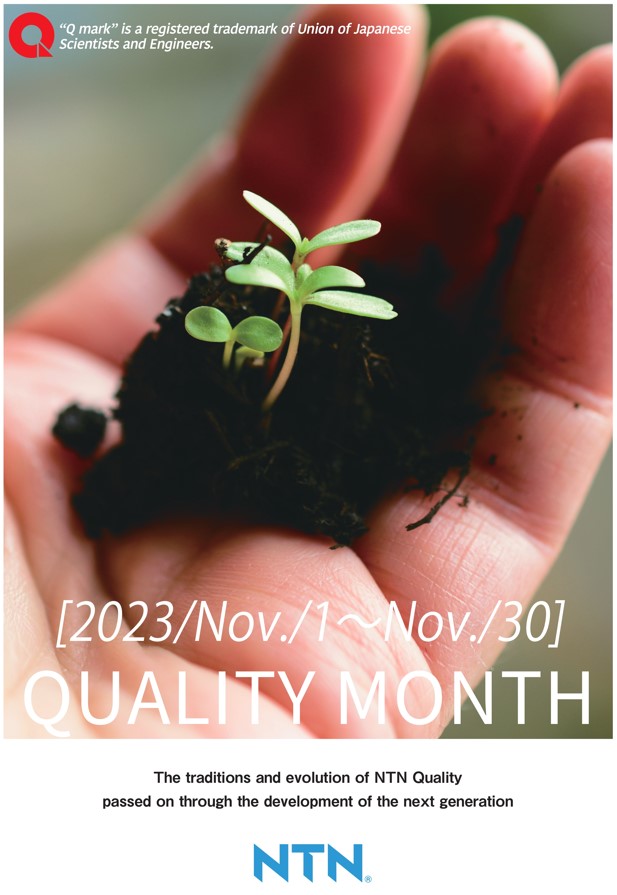
To further promote quality awareness among all employees, we hold various activities throughout November every year, which is recognized as “Quality Month”. FY2023 theme was “The traditions and evolution of NTN Quality passed on through the development of the next generation,” with a focus on human resources development. Activities were implemented to ensure that the knowledge and skills necessary for maintaining quality were effectively passed on. In addition to reaffirming the universal principles and rules to be followed, targeted initiatives were promoted in each department, and efforts were made to improve quality globally.
As part of these activities, a customer satisfaction survey is conducted annually, providing an opportunity to hear directly from customers about their satisfaction levels and any requests they may have. In the FY2023 survey, we received responses from 112 companies. The percentage of responses rating the overall evaluation as “Excellent” or “Good” increased by 5% from the previous fiscal year, reaching 93%. We will make improvements based on customer requests and continue to provide quality that meets customers’ needs to further enhance satisfaction in the future.
■Quality Month poster
Strengthening the production system of domestic plants and supply capacity for the aftermarket business
The SCM Strategy Headquarters was launched in April 2023 to optimize the overall supply chain from material procurement to product sales, in our pursuit of ensuring stable supplies to customers and responding flexibly to changes in the market and economic conditions. We utilize our IT core system (SAP) to forecast future demand and confirm inventory information in real time, and increase or decrease production capacity flexibly corresponding to production load, which allows us to adjust supply and demand in advance. By doing so, we are promoting both the production stabilization and inventory reduction. In addition, we are working to strengthen the production system, including production capacity expansion, with a view to expanding our global strategic inventory of general-purpose products (FIRST). We will achieve the early expansion of the aftermarket business, through the on time supply to all aftermarkets both in Japan and overseas.
Utilization of Digital Technologies
Stabilizing new core systems and strengthening their functions
The rebuilding of NTN’s core systems is a company-wide project that involves using ERP*1 and other new package systems to standardize work processes and systems, in order to establish an IT foundation for supporting future promotion of digital transformation (DX), enhancing business speed and service levels, and promote greater business efficiency. Following the start of operation of new systems in the areas of financial accounting, human resources and payroll, and technology, new systems in the area of SCM went into full-scale operation from August 2020, including systems related to the sale of finished products, logistics, demand and supply adjustments, and inventory control. Since then, we have been advancing efforts to adopt new systems in the areas of production, procurement, work processes, work-in-progress, and costing in each manufacturing plant. With the new systems in operation, we have successfully enhanced the efficiency of drawings and prototype management through the digitalization of sales activities and introduction of project management systems, accelerated response times for price and delivery date inquiries, strengthened inventory control, and improved the sophistication of cost management. In addition to using EDI and e-commerce to receive information on customer demand and orders, we will also link future demand forecasts, prepared by using statistical forecasts based on up-to-date demand information, inventory information, and actual sales results, to the manufacturing plants. In this way, we aim to ensure stable supplies to customers and respond flexibly to changes in demand and other factors.
In addition to introducing new communication tools toward realizing work style reform, we are also promoting efforts to streamline routine internal tasks, such as by strengthening the functionality of our core systems, boosting automation through integration with the core systems using RPA*2, and going paperless. Furthermore, we are working to create a data-driven*3 environment for objective and swift decision-making.
*1 ERP: Enterprise Resource Planning, a package software that coordinates the core operations of a company, such as sales, logistics, production, accounting, and human resources.
*2 RPA: Robotic Process Automation, software robotics technology that provides the mechanism for automating operations that are performed on computers.
*3 Data Driven means to decide on strategies and policies based on the results of analyzing data collected and accumulated, rather than relying on experience and intuition as per the conventional practice.