CSR activities in FY2023
Outside Director Dialogue
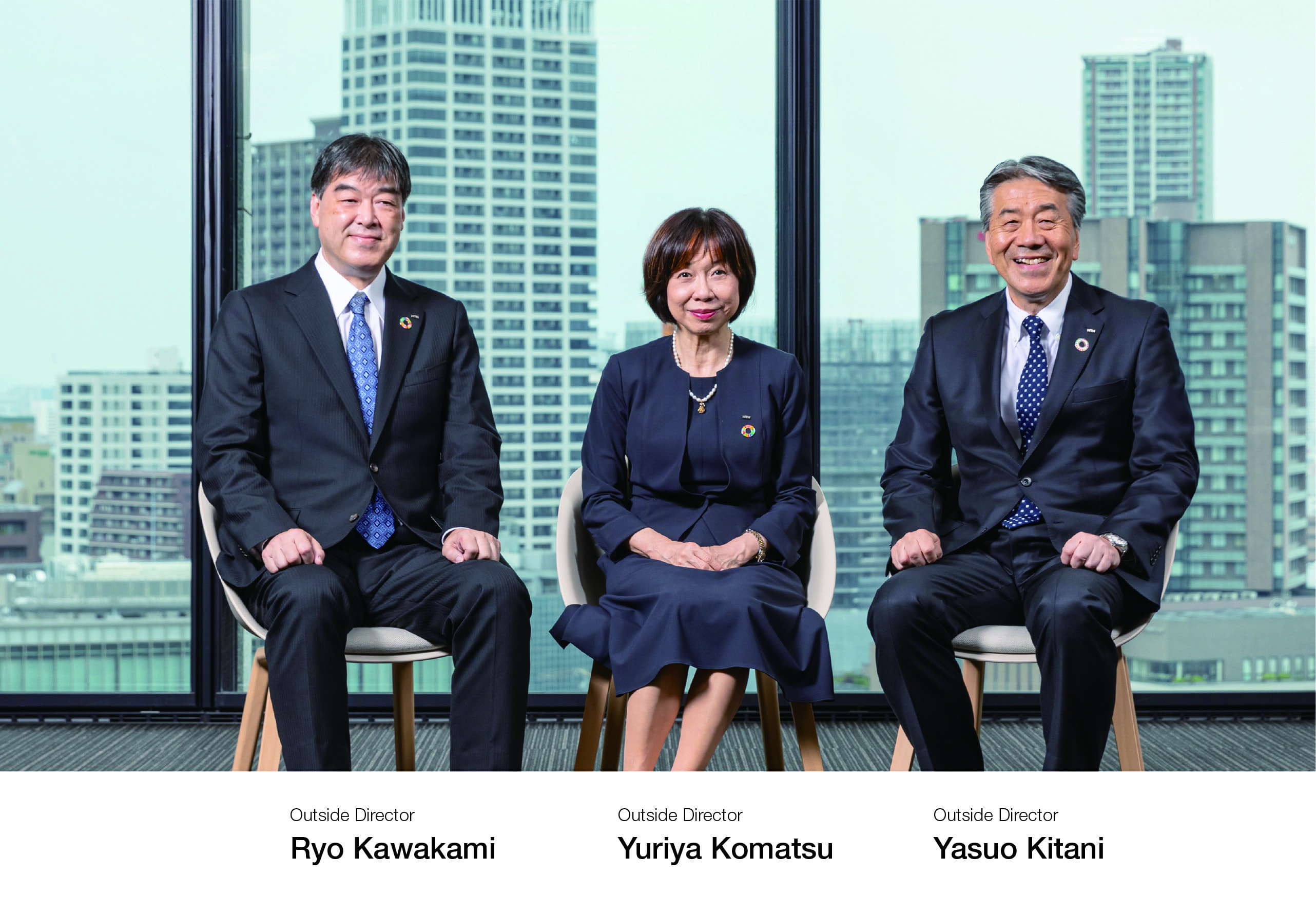
Every year, the NTN Report provides an opportunity for Outside Directors to discuss NTN’s management and sustainability issues. The contents of discussion is published as “Outside Director Dialogue.” This year, Director Komatsu, Chairperson of the Board of Directors, Director Kawakami, who has been a director of NTN for many years, and Director Kitani, who was appointed to the Board last June, held a frank and honest talk about NTN's current situation and challenges.
Topic 1 Reflecting on the Medium-term Management Plan “DRIVE NTN100” Phase 2
The Medium-term Management Plan “DRIVE NTN100” Phase 2, aimed at achieving the revitalization of NTN, reached its final year in FY2023. Reflecting on efforts over the past three years, could you tell us your assessment?
- Kitani:
-
Under “DRIVE NTN100” Phase 2 (hereafter “Phase 2”), which began in FY2021, we have been working on eliminating deficits, increasing profit margins, and improving our cash flow and financial position. As FY2023 marks the final fiscal year of the plan, we have reflected on our progress. Unfortunately, our conclusion does not allow us to beat the drums in victory and declare that we had done a great job.
Among the numerical targets, while we achieved our target net sales and free cash flow, we failed reach the target operating income, operating margin, inventory turnover ratio, ROIC, and ROE. In addition, challenges remain in areas such as procurement reform and new product development. With regard to reorganization of production , although we made progress in outsourcing the production of bearings, there have been delays from the initial plan.
On the other hand, I think that we performed well in the aspect of price negotiations. We adopted the approach of basically passing on all costs, including inflation costs, to selling prices, and also negotiated price increases for low-profit transactions. Although the results of negotiations currently vary depending on the region and customer, I think that we deserve recognition for achieving an operating profit in the automotive business for the full fiscal year in the final year of Phase 2. - Komatsu:
-
We have also heard from investors that while they have high expectations of Phase 2 even if the targets are not achieved, they wonder if the next Medium-term Management Plan will truly be able to produce results.
- Kitani:
-
Currently, in the aspect of corporate value, as the current PER and PBR figures indicate, we do not pale in comparison with our domestic competitors. Rather, we are in a superior position. However, there is a still a large gap when compared to our overseas competitors, and further reform and evolution are necessary to close this gap. We recognize that our weakness lies in the fact that we are not physically able to make investments of significantly large amounts.
- Kawakami:
-
I think a major factor behind the restrained investment so far is the impact of the price cartel in 2010. It is said that cartel issues cause widespread damage, and it takes decades to recover from that damage. For our company, I feel that this negative impact has finally subsided and been resolved by the end of Phase 2.
- Kitani:
-
Indeed. Over the three years of Phase 2, we scaled down our investment cash flow to a level below depreciation expenses, and prepared a budget of just under 60 billion yen in total.
Moreover, in terms of risk, the high ratio of the automotive business used to pose a risk for NTN. However, in the most recent period, from the perspective of actual results compared against plans, the automotive business has been supporting the Company’s performance, and we boast the leading market shares in the world for our flagship products (hub bearings and driveshafts). Although the industrial machinery business still contributes a high profit margin for bearings, I think it is important to improve profit margins by leveraging the technological advantages of the automotive business and promoting “selection and concentration”.
Topic 2 New Medium-term Management Plan “DRIVE NTN100” Final
Could you tell us about the new Medium-term Management Plan, “DRIVE NTN100” Final, announced in May 2024?
- Komatsu:
-
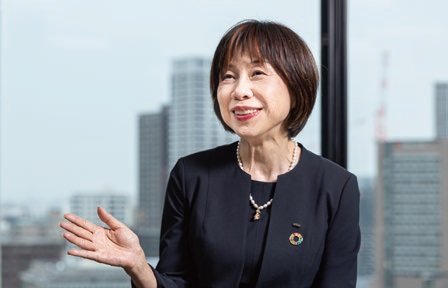
The most important point about the new Medium-term Management Plan “DRIVE NTN100” Final (hereafter, “the new Medium-term Management Plan”) is that we work seriously toward completing the structural reforms aimed at improving profits and strengthening our financial position over the next three years. All the Directors of NTN share this recognition.
To be sure, our financial and operating margin figures have improved from before, and I think that investors are appraising these positively to a certain extent. However, profit margins have not reached the level investors are looking for, and inventory turnover ratio and cash conversion cycle (CCC) have not improved. I think we need a system that can enable the hard work of our employees to generate sufficient cash flow to support sustainable growth.
To resolve these issues, under our new Medium-term Management Plan, we have restructured the organization by breaking the Company up into product-based segments and clearly defining responsibilities. This will facilitate the smooth and continuous checking of data on individual businesses and lay the groundwork for discussing the feasibility of continuing with a business. This is the first key point of the new Medium-term Management Plan.
The second key point is the full-scale implementation of reorganizing production and the completion of structural reforms in order to strengthen the competitiveness of the OEM business. We expect to achieve improvements in CCC by discontinuing products whose returns are below the cost of capital. - Kitani:
-
With regard to the scale of investment as I mentioned earlier, we are projecting investment cash flow of approximately 120 billion yen, which corresponds to depreciation expenses, in the new Medium-term Management Plan. This is about twice the scale of the amount in Phase 2.
In addition, a measure that was not included in Phase 2 is the incorporation of extraordinary losses into the budget. When we discontinue unpopular products that do not sell or products that are not profitable even if they do sell, it becomes necessary to reorganize production facilities or other elements, which sometimes results in extraordinary losses. This reflects our desire to improve profitability and earning power on a day-to-day basis, even if it means that we will have to overcome such pain. I think that this is very commendable, and I have high hopes that we will achieve progress in our structural reform. - Komatsu:
-
There are concerns that processing with structural reforms too slowly may lead to further and deeper damage. This is why I have been saying from before that it is important to act with a sense of speed.
In this respect, the new Medium-term Management Plan has adopted “inventory level” as a criterion for personnel evaluation. It is difficult to advance measures that are not linked to personnel evaluation, so I think it is commendable that the company has made such bold changes to personnel affairs.
Furthermore, the speed at which structural reforms are carried out depends greatly on how on-site managers respond to top-down instructions. During the three years of Phase 2, President Ukai was continuously saying that we can stop selling products that are in the red. This advice finally bore fruit in the third year of Phase 2. As we transition into the new Medium-term Management Plan going forward, I will expect even faster on-site responses to the President’s instructions. - Kawakami:
-
I agree. Moving to the subject of governance, NTN became a Company with Nominating Committee, etc. in 2019, and is now one of the few corporations in Japan that has adopted such an organizational structure.
The advantage of being a Company with Nominating Committee, etc. is that Executive Officers, rather than a board such as the Board of Directors, are responsible for decision-making on matters related to business execution. This makes it possible to undertake policy decisions with a sense of speed.
However, the culture of business execution processes at Companies with Board of Company Auditors has long become deeply rooted, and I think that we have not yet fully exerted and leveraged the flexibility of Companies with Nominating Committee, etc.
Under the new Medium-term Management Plan, the organizational structure has been changed to a product-based structure that focuses on the Bearing Business and the CVJ & Axle Bearing Business, and the decision-making process and lines for business execution have been better and more clearly defined. This type of product-based organizational structure seems to be compatible with the organizational structure of a Company with Nominating Committee, etc. Therefore, I expect the speed of structural reform to accelerate further as we move forward. - Kitani:
-
Previously, the Company had a strong regional focus and faced issues with the global leadership of each business. The decision-making authority was reviewed at the same time as the organizational restructuring, and a vertical axis was firmly established, granting decision-making authority for overseas matters to the managers of the business headquarters. I believe that this will lead to improvements, and I think that it is also something that we can have high hopes for.
Topic 3 Current status of governance
Please tell us about your activities as members of the Nominating Committee, Compensation Committee, and Audit Committee at a Company with Nominating Committee, etc.
- Kitani:
-
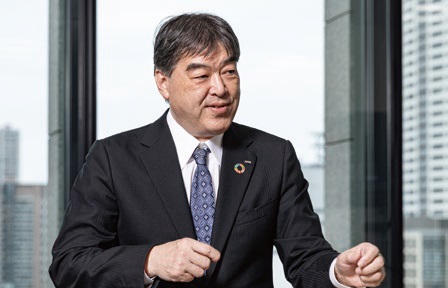
As the Chairperson of the Audit Committee, I have been following in the footsteps of my predecessor and advancing efforts with an exploratory approach. To date, we have conducted on-site audits at a total of 62 locations, including overseas. By identifying errors at the sites and interviewing members of the management teams, the Committee thoroughly investigates the underlying internal control issues and proposes improvement measures.
As the Chairperson of the Audit Committee, I report at the Board of Directors once every three months on various issues that we encounter on a daily basis. In response to these reports, the CEO and other Directors respond quickly and proactively, and take measures smoothly. This is very rewarding for me.
However, we feel that there are still issues with our reporting capabilities. Going forward, we will cooperate with the Internal Audit Department and the Internal Control Department to improve the accuracy of our audits and clarify priorities as we proceed with the audits. Through these activities, we hope to prevent errors on sites and improve the governance level across the entire company. - Komatsu:
-
The Compensation Committee discusses the compensation of Executive Officers. To date, we have held numerous discussions about the compensation system and evaluation. In FY2022 and FY2023, we performed strict and concise assessments of the performance of each Executive Officer, and proposed reviewing the contents of the compensation package for officers; that is, we proposed reviewing the ratio of fixed and performance-linked compensation, which is currently 6:4, and revising it to increase the ratio of performance-linked compensation.
I think the Compensation Committee is highly receptive to such proposals as the President gives them careful consideration. As a result, we have been able to set individual goals for each Executive Officer, and established measures to evaluate them positively or negatively against these goals.
Once the goals of the new Medium-term Management Plan have been achieved and a virtuous cycle is created, we are also proposing an increase in the weightage of performance incentives in the compensation for officers, while keeping fixed expenses at the same level.
Another challenge for this Committee is the work of verifying if the goals set by each Executive Officer are appropriate. I believe that we can resolve this issue by having the Compensation Committee check the reports presented by the Executive Officers in the future.
The indicators used to determine performance-linked compensation for Executive Officers include KPIs such as net sales, operating margin, ROIC, and inventory turnover ratio, which we believe are more advanced than those of other companies. - Kawakami:
-
I think that the Nominating Committee functioned effectively when President Ukai took over from former President Ohkubo in 2021. I feel that we were successful in selecting someone who was most suitable for the position after much discussion, given the difficult situation and environment that NTN was facing at the time.
The Nominating Committee recognizes that the succession plan is an issue that needs to be addressed. When considering the ideal vision for the Company in the medium- to long-term, and even 100 years from now, it is difficult to decide on the kind of people whom we wish to be our leaders, what criteria we should use to select them, and what kind of career plans would be best for that purpose. Discussions are still ongoing with regard to this issue.
While this is still currently a work in progress, we are working on having the next generation of human resources build their careers globally. While monitoring their efforts and achievements, the Committee is engaged in discussions on how the appropriate human resources should be selected.
Moreover, the perspective of strengthening governance is also important in succession planning, and NTN has positioned “strengthening governance” as one of the items in our materiality. NTN’s materiality is reviewed and checked at meetings of the Sustainability Committee held twice a year, and the results are reported to and discussed by the Board of Directors. Additionally, materiality is constantly being reviewed and improved in response to changes in the times and society.
“What is materiality?” This is a loaded question, and we should always consider whom it is material to. Currently, I do not think that we have left out any important issues among those that NTN has identified as materiality. However, in a rapidly changing social situation, we must not forget to verify and review our materiality.
Topic 4 Aspirations for the future
The Company has embarked on a new journey under the new Medium-term Management Plan. Could you tell us what your aspirations are for the future?
- Kitani:
-
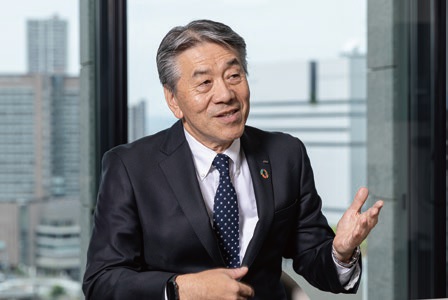
I am a member of both the Audit Committee and the Nominating Committee, but I have to date been more active in the Audit Committee. I visit the sites and conduct interviews with many people. In these activities, I think that it is vital not to overlook any flaws in our internal control. Nevertheless, as a company, it is physically impossible to address all problems equally. Therefore, as a member of the Audit Committee, I aim to provide support by clarifying priorities, offering opinions, and putting effort into improving the effectiveness of the Committee.
At the same time, I think that I will be engaged in more activities as a member of the Nominating Committee going forward. I aim to contribute to the activities of the Nominating Committee by gaining thorough knowledge of the lineup of middle management executives and understanding the types of human resources present in our Company through interviews. Based on that, I wish to enhance my awareness by comparing them with the requirements for the human resources who will serve as leaders for future generations. - Kawakami:
-
Generally, lawyers may often be perceived to be stepping on the brakes and stating that it is not acceptable to do this or that due to compliance. The significance behind shareholders appointing lawyers as Outside Directors of NTN is, of course, founded upon compliance. However, a company cannot be viable if it does not take any risks, regardless of the severity of the risks. I believe that there are also times when a company must take risks. While Illegal, inappropriate, and irrational actions are naturally out of the question, in times when NTN must make the management decision to take risks, I hope to serve as a good navigator, clarifying what risks exist, their legal appraisal and their impact on compliance, as well as being a presence that helps to create an environment in which rational and appropriate decisions can be made.
- Komatsu:
-
I was appointed as a Director in 2020 and have been serving as the Chairperson of the Board of Directors since 2022. Having observed the Company’s Board of Directors for more than four years, I realize that the speed of management has increased considerably. However, as I mentioned earlier, many challenges remain, such as improving inventory and CCC. Various measures have been launched to achieve the goals set out in the new Medium-term Management Plan, but it is our role as Outside Directors to monitor the situation closely, investigate the causes when something cannot be achieved, and work together to think about how to achieve them. The new Medium-term Management Plan has been named “Final”. I aim to fulfill my role so as to contribute to completing the Company’s reform and achieving its revitalization over the next three years.
Message from a newly appointed Director
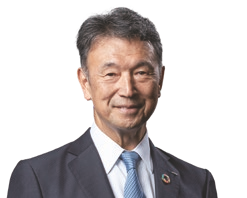
Tatsuhiko Toshita
I have long been involved in the sales operations of steel product distribution, as well as business management both in Japan and abroad.
Most recently, as the CEO of a steel trading company, I worked on reforming the profit structure of the company by redefining the corporate philosophy, with a view of creating an organization that can adapt to the changing times and continue achieving growth.
By leveraging the knowledge and lessons drawn from the achievements as well as setbacks of these experiences, I will put utmost effort into continuing activities that contribute to enhancing NTN’s corporate value sustainably, and to creating value for all its stakeholders.
Firstly, I will strive to communicate closely with the Directors, Executive Officers, and all employees, while also visiting the operational sites in person to share information and understand the actual conditions. At the same time, I hope to foster healthy and positive pressure through open-minded discussions and exchanges of opinions.
In the implementation of the Management Plan, I will be constantly mindful of the medium to long-term perspective and producing results steadily, and work with all employees to accelerate efforts in addressing the issues faced by NTN. I look forward to your continued support and cooperation.