CSR activities in FY2023
Resource Recycling and Pollution Prevention
The NTN Group has established a system to comprehensively promote the 3Rs (Reduce, Reuse, Recycle), taking into consideration the sustainable use of resources, as well as the reduction of waste and resources input, such as raw materials and water. Alongside thoroughly managing chemical substances used in our products and manufacturing processes, we actively switching to the use of alternatives from raw materials containing chemical substances subject to the PRTR Act (Act on the Assessment of Releases of Specified Chemical Substances in the Environment and the Promotion of Management Improvement). We maintain a high recycling rate by reducing the volume of waste generated, set annual targets for the volume of chemical substances subject to the PRTR Act that is handled, and promote efforts toward achieving these targets.
Resource Recycling Initiatives
Material Balance
■Material balance of business activities (FY2023) [Global]
INPUT
OUTPUT
| Resources | 57.6 | ten thousand tons | |
|---|---|---|---|
| Steel materials | 56.0 | ten thousand tons | |
| Resin materials, grease, etc. | 1.6 | ten thousand tons | |

| Raw material procurement |
|---|
 |
| Atmospheric emissions | 219 | ten thousand tons |
|---|---|---|
| CO2 emissions | ||
| (Scope 3 Category 1) (Japan) |

| Energy | 6,083 | TJ*2 | |
|---|---|---|---|
| Fuel | Gasoline | 46 | thousand liters |
| Kerosene | 544 | thousand liters | |
| Diesel oil | 342 | thousand liters | |
| Heavy oil A | 89 | thousand liters | |
| LPG | 11,175 | tons | |
| City gas (Japan) | 8,767 | thousand ㎥ | |
| Natural gas (Overseas) | 17,768 | thousand ㎥ | |
| Purchased electricity | 1,116 | GWh | |
| Purchased electricity (renewable energy) | 106 | GWh | |
| Power generation from natural energy sources | 14 | GWh | |
| Water | 283 | ten thousand ㎥ |
|---|---|---|
| Tap water | 162 | ten thousand ㎥ |
| Industrial water | 23 | ten thousand ㎥ |
| Groundwater | 97 | ten thousand ㎥ |
| Chemical substances subject to the PRTR Law (Japan) | ||
|---|---|---|
| Input volume | 8,145 | tons |
| Development /Design |
|---|
 |
| Forging /Turning |
|---|
 |
| Heat treatment |
|---|
 |
| Grinding /Polishing |
|---|
 |
| Assembly |
|---|
 |
| Atmospheric emissions | 54 | ten thousand tons |
|---|---|---|
| CO2 emissions (Scope 1 and 2) | ||
| CO2 emissions (Scope 1) | 9 | ten thousand tons |
| CO2 emissions (Scope 2) | 45 | ten thousand tons |
| NOx(Japan) | 37.4 | tons |
| SOx(Japan) | 9.1 | tons |
| Wastewater | 226 | ten thousand ㎥ |
|---|---|---|
| Rivers | 214 | ten thousand ㎥ |
| Sewers | 12 | ten thousand ㎥ |
| Chemical substances subject to the PRTR Law (Japan) | ||
|---|---|---|
| Volume released and volume transferred | 113 | tons |
| Waste generated | 163,584 | tons |
|---|---|---|
| Volume recycled | 158,687 | tons |
| Volume disposed to landfill | 4,897 | tons |
| Recycling rate | 97.0 | % |
*The NTN Group in Japan generated 532 tons of specially controlled industrial waste.
| Transported volume (Japan) | ||
|---|---|---|
| Freight weight × Distance | 110,947 | ten thousand tons/km |
| Logistics |
|---|
 |
| Atmospheric emissions | 1.8 | ten thousand tons |
|---|---|---|
| CO2 emissions | ||
| (Scope 3 Category 9) (Japan) |
*1 Calculated using emission factors based on “Electricity Utility Emission Factors” (published by the Ministry of the Environment and Ministry of Economy, Trade, and Industry) for Japanese sites, and emission factors based on “Emission Factors” (IEA) for overseas sites.
*2 The energy of electric power is calculated using the physical quantity of 3.6 MJ/kWh, and the energy of fuel is calculated using the emission factor set out in the “Emissions Unit Values Database for Accounting of Greenhouse Gas Emissions, etc., by Organizations Throughout the Supply Chain (Ver. 3.3)” (published by the Ministry of the Environment).
Reducing water consumption
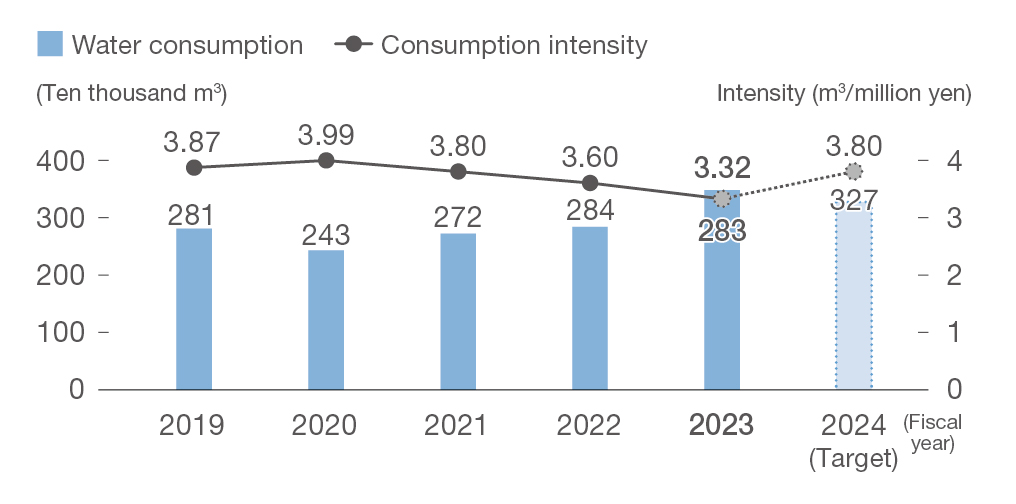
Water consumption intensity for FY2023 was 3.325 ㎥/million yen globally, achieving our target. We will continue to aim for our target of reducing water consumption unit in FY2024.
■Water consumption/consumption intensity
Water stress (forecast for 2040) and water consumption by region
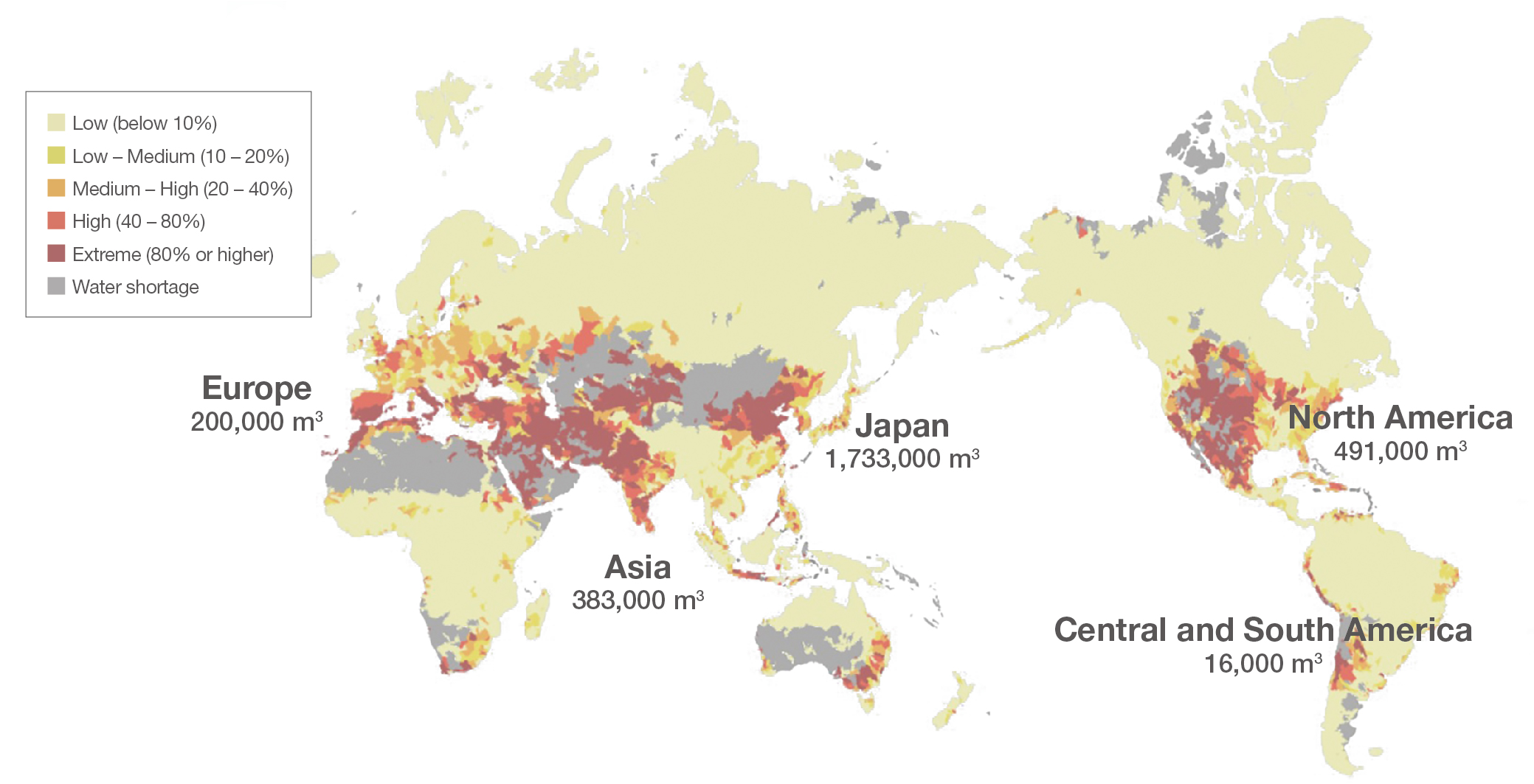
The NTN Group conducts water stress analysis using the AQUEDUCT system (a free tool provided by the World Resources Institute (WRI)) and applies the results in the management of water risks such as the depletion of water resources.
■Predicted changes in water stress (estimated for 2040) and water consumption by region (FY2023)
Water projects in France
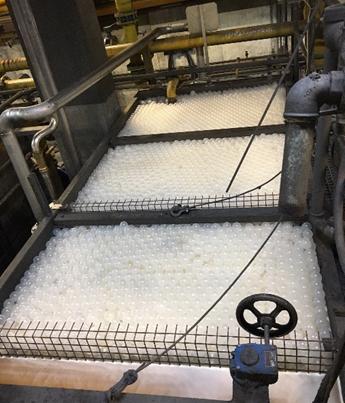
NTN Europe S.A. (NTN EU – France) has taken a multipronged approach to reducing water consumption, and successfully reduced water consumption by 17% from FY2022 to FY2023 This is the result of measures such as setting up a Water Management Group, establishing water consumption review methods, formulating an action framework, mapping water meters, and reducing wastewater. Examples of specific projects include evaporation prevention tests at the Seynod plant, reducing water consumption by 30% at the Argonay plant, installing water level gauges at the ICSA plant in Italy, and conducting training to optimize water consumption at the Curitiba plant in Brazil. Through such initiatives, the NTN Group aims to promote sustainable water resource management globally and contribute to environmental protection.
■Test to cover a container with “Euro-Matic” balls to prevent evaporation (NTN EU)
Conducting regional water risk assessments
The NTN Group comprehensively assesses regional water risks and engages in efforts to promote sustainable water resource management. Such assessments are aimed at predicting the impact of climate change and population increases on water supply, in order to formulate strategies for mitigating risks in cooperation with the local communities and industries. Through this, we take concrete measures to protect water resources in the region and secure a stable supply into the future.
Response to water risks in India
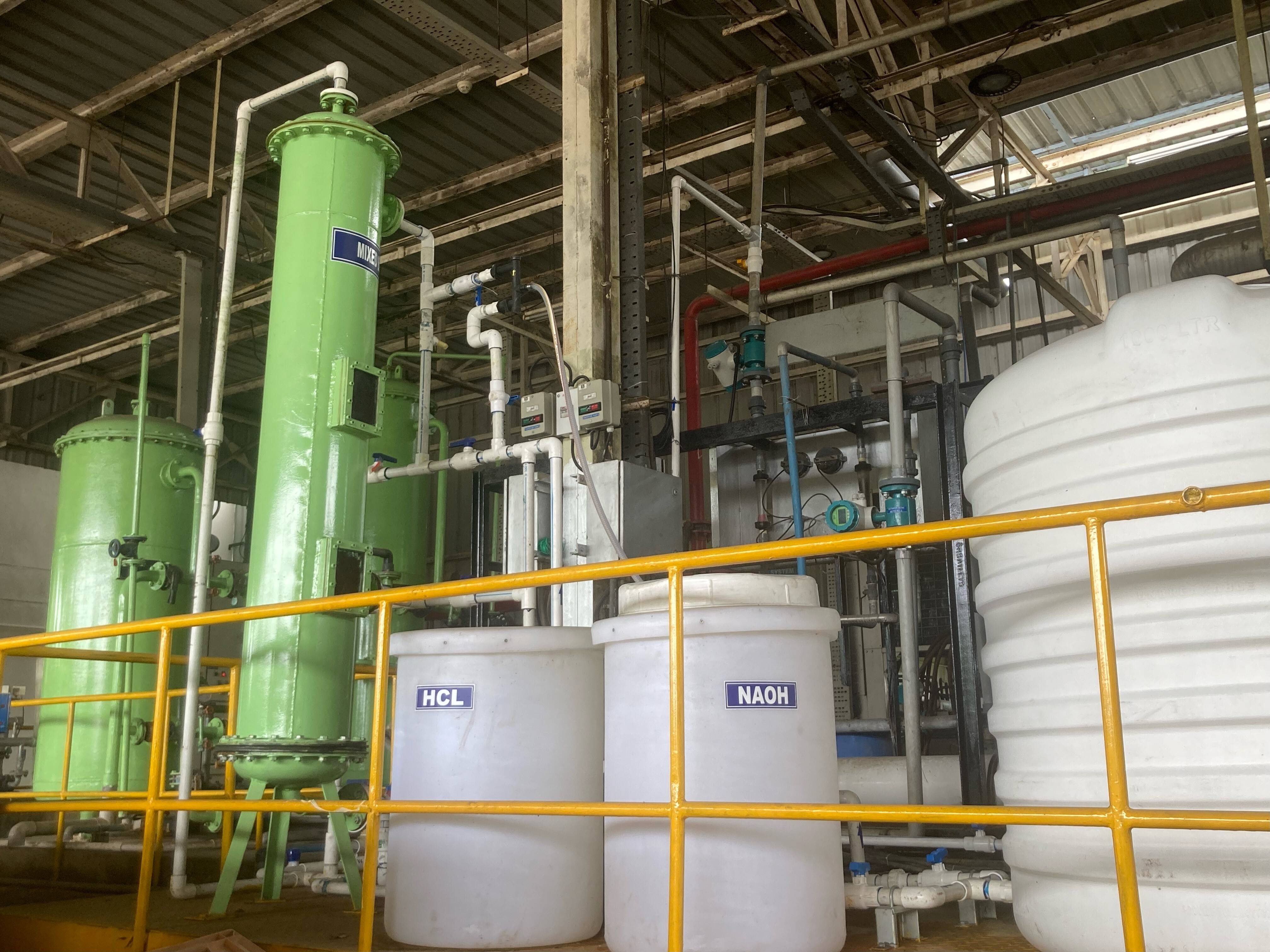
Among NTN Global’s companies, we have identified the Bawal and Chennai plants of NTN NEI Manufacturing India Private LTD. (NNMI) in India as having the highest water risks. In particular, the Chennai plant faces severe water shortage in summer, making it necessary to purchase water using tanker trucks and carry out water treatment with reverse osmosis membranes. To address such problems, we are striving to mitigate water risks by considering the introduction of new rainwater collection systems and water recycling systems, as well as to reinforce education on water consumption for employees.
■Dual media filtration water treatment tanks and reverse osmosis membrane treatment facilities (NNMI)
Reducing the volume of waste generated and maintaining a high recycling rate
In FY2023, we worked on improving recycling rate and achieved the global target of 97.0%. In FY2024, we will continue with efforts to minimize the volume of waste generated, and to put effort into achieving our target recycling rate, taking the reduction of waste generated and maintaining high recycling rate as our indicators.
■Volume of waste generated and recycling rate
![Volume of waste generated and recycling rate [Domestic/Overseas]](../images/environment/chemical/img_95_1.jpg)
Solidification of sludge generated in the grinding process
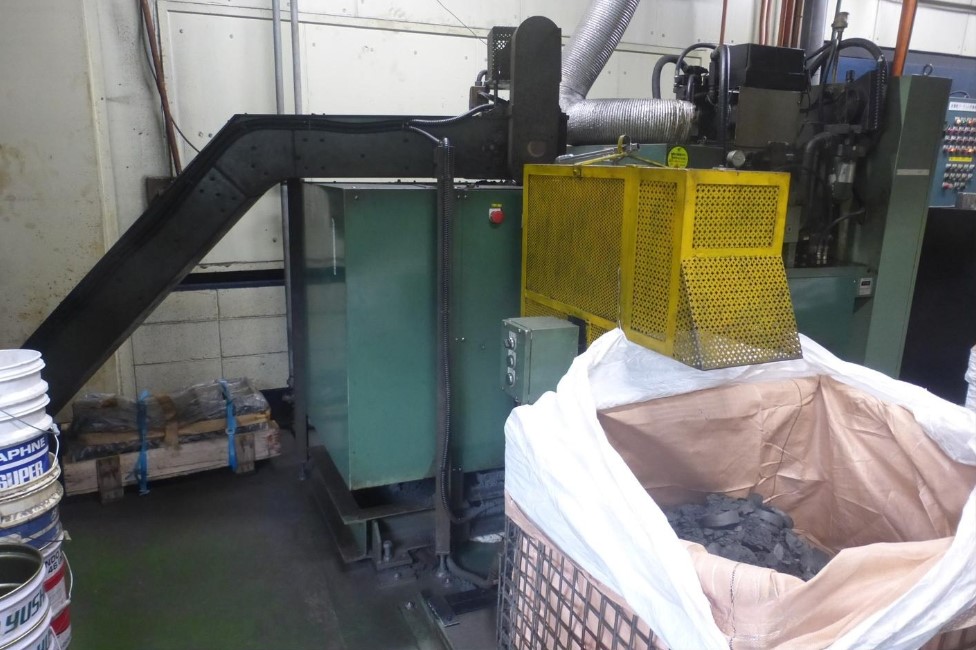
The NTN Group has developed grinding sludge solidification equipment and introduced it at NTN Global plants, as well as sold it to external parties. Sludge discharged during the grinding process of metal components contains a large amount of coolant liquid in addition to metals. However, the introduction of this device can realize material recycling by separating the coolant liquid and compressing the sludge into solids with a high metal content. Moreover, the separated coolant liquid is filtered in the device and recycled. In FY2023, we recycled approximately 5,257 tons of solidified grinding sludge.
■Performance of grinding sludge solidification equipment (FY2023)
| Number of units in operation | Weight recycled (tons/year) | |
|---|---|---|
| Japanese sites | 50 | 3,294 |
| Overseas sites | 15 | 1,963 |
| Total | 65 | 5,257 |
■Grinding sludge solidification equipment (Iwata Works)
Response to the Plastic Resource Circulation Act
In response to the Plastic Resource Circulation Act, the NTN Group is reducing plastic consumption, promoting recycling, and strengthening cooperation across our entire supply chain. Specifically, we are working on reviewing product designs, improving the recycling system, developing technologies, and sharing information, with the aim of building a sustainable resource recycling model. Furthermore, we are promoting improvements in environmental awareness and behavioral change by educating employees and raising awareness among consumers. In this way, we contribute to environmental conservation and realizing a sustainable society.
Reusing the by-products of production
The NTN Group does not directly dispose of the by-products of production such as the coolant that is discharged in processes, but proactively promotes their reuse by consulting with external operators on the possibility of improving operations and reusing by-products.
Recycling and reusing cleaning oil, and extending its useful life
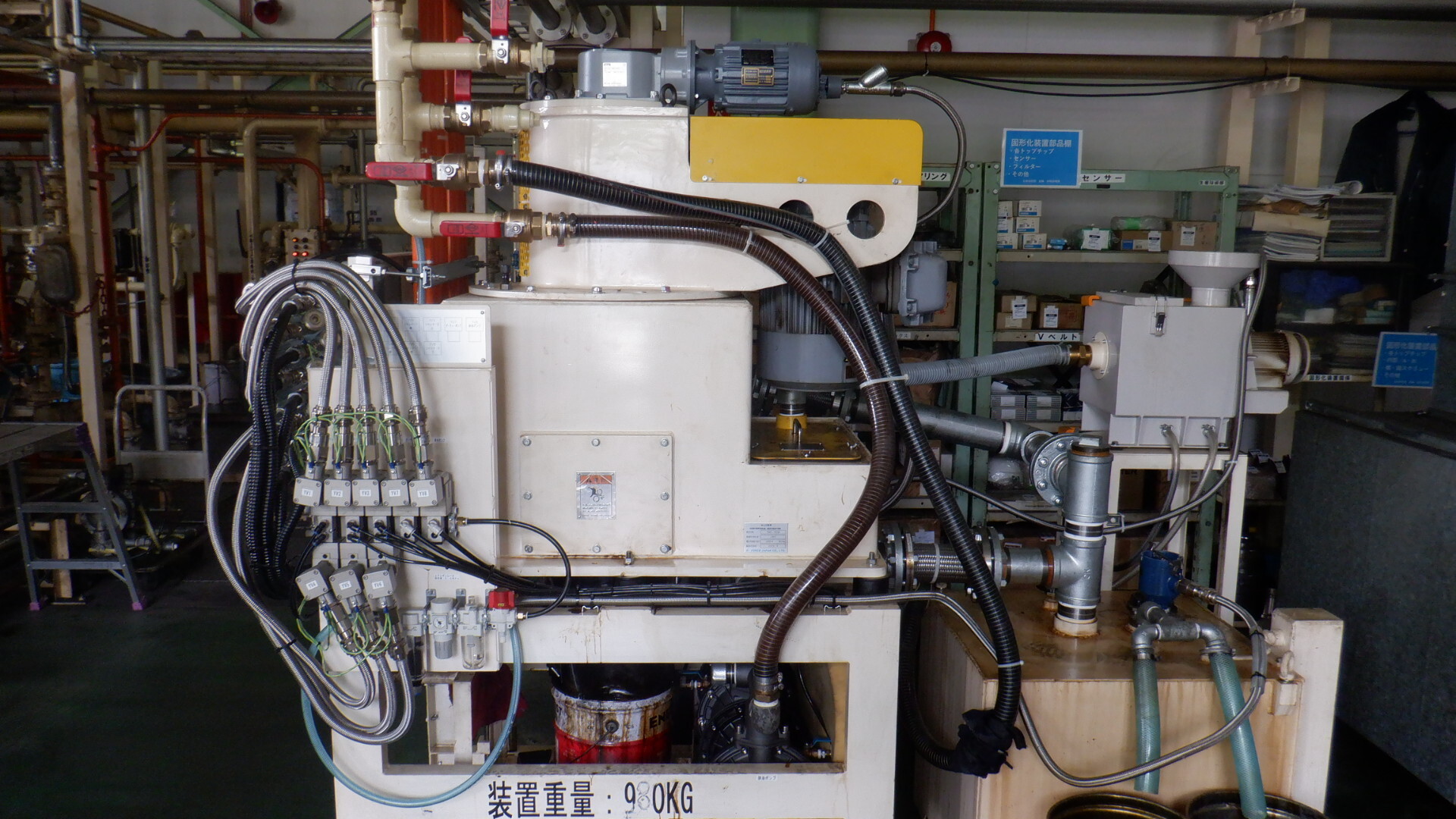
NTN Mie Corporation (Kuwana-shi, Mie, Japan) has installed centrifugal separators that remove impurities introduced during the cleaning process, with the aim of extending the useful life of cleaning oil used in the product cleaning process. As a result, it was able to reduce the volume of waste oil generated during the regular replacement of deteriorated cleaning oil by approximately 10 tons in FY2023.
■Centrifugal separator that removes impurities in cleaning oil (NTN Mie Corporation)
Reducing packaging materials
The NTN Group is reviewing the use of returnable boxes and switching to simple packaging upon consultation with customers, with the aim of reducing the amount of disposable plastic used. We will continue to review potential alternative packaging materials while securing product quality.
Reuse of packaging materials in Germany
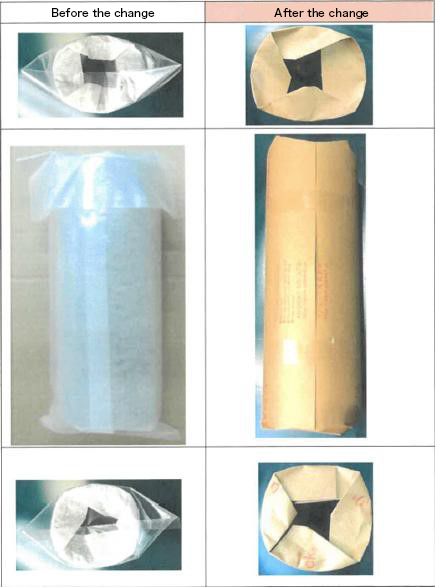
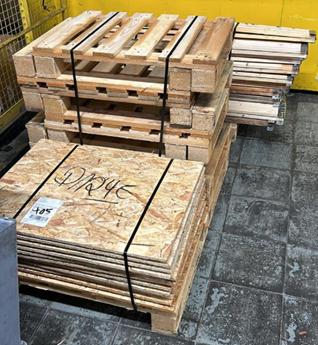
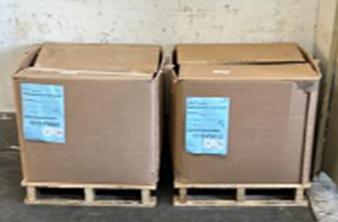
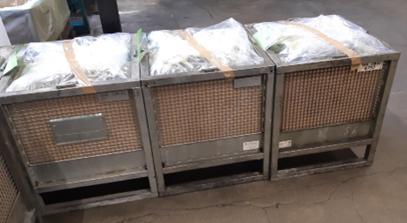
NTN Kugellagerfabrik (Deutschland) GmbH (DMF, Germany) is making ongoing efforts to reduce the amount of packaging used and the volume of waste generated. It has successfully reduced plastic waste by switching from white rust-proof paper and foil to brown rust-proof paper. In addition, it has changed the packaging for grindstones to returnable packaging, thereby reducing the amount of cardboard and wood chip waste generated. Furthermore, it is promoting the reuse of pallets by switching from one-way pallets to Euro pallets. Returnable packaging has been introduced for the transportation of inner rings, switching from cartons and wood to steel boxes, thereby reducing environmental impact.
■Reducing plastic waste by changing the rust-proof paper (DMF)
■Changing the packaging material for grindstones to returnable packaging
■Introduction of returnable packaging
 →
→
Efforts to Prevent Pollution
Reducing environmental impact in business activities
The NTN Group strives to reduce the environmental impact of our business activities and contribute to the realization of a sustainable society through the following efforts: reducing emission gases by utilizing the latest environmental technologies, preventing water pollution including in circular water utilization systems, addressing soil pollution through regular soil inspections and control of chemical substances, recycling activities that promote the reuse of waste in the manufacturing process, and environmental education and activities to raise awareness among employees and local communities.
Addressing air pollutants in China
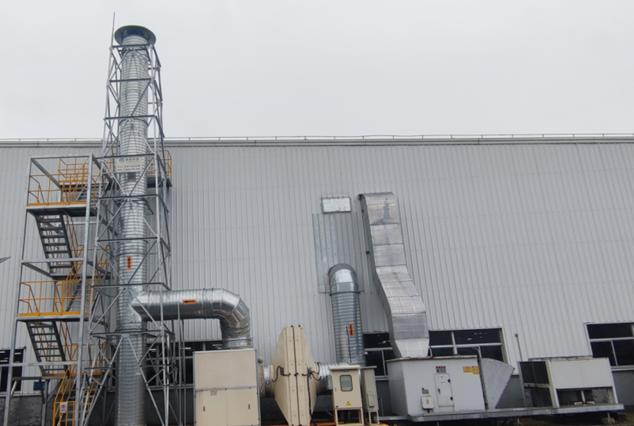
Shanghai NTN Precision Machinery Co., Ltd. (SNC, China) generates emission gases that include oil mist when processing products using high-frequency heat treatment equipment. Regulations in Shanghai City stipulate a limiting value of 5 mg/㎥ on oil mist and organic compounds contained in emission gases. For this reason, SNC has introduced advanced air emission treatment equipment with treatment capacity of 35,000 ㎥/hour, which reduces the emission concentration of organic compounds and oil mist after the treatment process to below 1 mg/㎥. Emission gases go through dual media filtration, and therefore fall significantly below the Comprehensive Emission Standards for Air Pollutants prescribed by Shanghai City. In accordance with the standards, they are released at a height of 15 meters or higher, thereby contributing to sustainable production and environmental protection.
■Air emission treatment equipment with treatment capacity of 35,000 ㎥/hour (SNC)
Improving the quality of wastewater in France
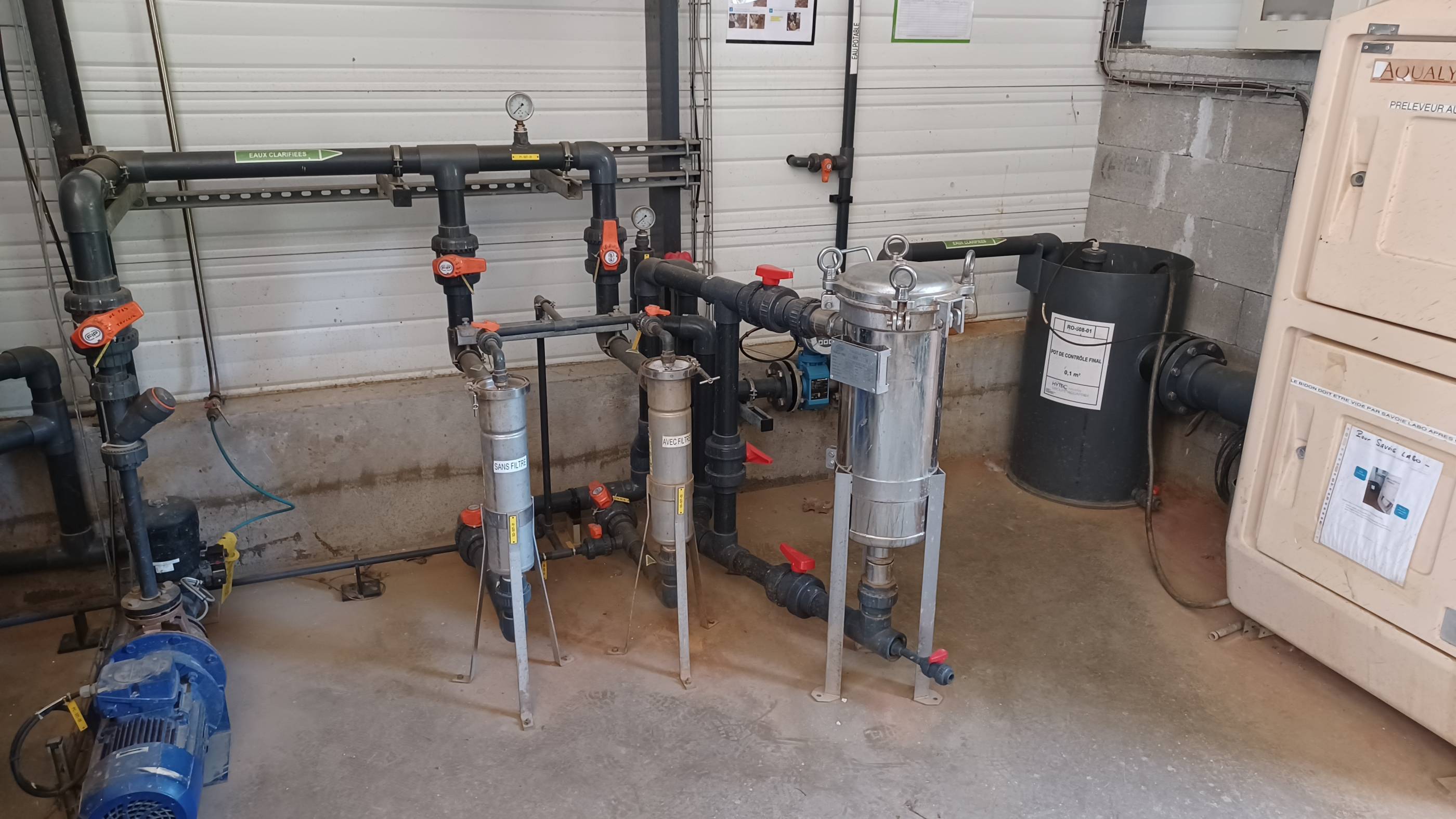
The Seynod plant of NTN Europe S.A. (NTN EU – France) meets water quality standards required for wastewater treatment facilities in the region. To comply with regulations on the content of hexavalent chromium, which are more stringent than Japanese standards, it has introduced wastewater treatment equipment with advanced filtering functions to significantly reduce hexavalent chromium content in wastewater. This wastewater treatment equipment also removes hazardous impurities such as hydrocarbons, enabling the plant to meet all water quality standards. The NTN Group is promoting the introduction of the necessary equipment globally in order to adhere to environmental laws and regulations stipulated by national and local governments.
■Wastewater treatment equipment with filtering functions (NTN EU)
Installing soundproof walls near site boundaries
NTN Kinan Corporation (Kamitonda-cho, Nishimuro-gun, Wakayama, Japan) has installed soundproof walls on the east side of the second plant since 2013 out of concerns about noise that may disturb residents living nearby. In 2016, it further expanded the installation of the soundproof walls. As a result, it is reduced noise by about 15 dB outside the soundproof walls and allayed the noise pollution concerns.
■Soundproof walls on the east side of the second factory (NTN Kinan Corporation)
Reducing the volume of chemical substances subject to the PRTR Act handled
The NTN Group is working on identifying and reducing the usage of chemical substances that are subject to the PRTR Act (Act on the Assessment of Releases of Specified Chemical Substances in the Environment and the Promotion of Management Improvement), from among the chemical substances that are handled in our manufacturing processes in Japan. In FY2023, the number of target substances increased from 462 substances (of which 15 are Class I Designated Chemical Substances) to 515 substances (of which 23 are Class I Designated Chemical Substances) due to amendments to the PRTR Act, we collected SDS and calculated the volume of target chemical substances handled in order to identify the target procurement items. Among the chemical substances subject to the PRTR Law, for the eight substances with especially high volumes handled (refer to the table), we are working on switching to alternative raw materials that use less hazardous substances. In accordance with the intentions of the amended law, chemical substances contained in steel materials have also been included in the scope of application, thus resulting in an increased volume of target chemical substances handled.
■Volume of chemical substances subject to the PRTR Act handled (FY2023)
| Substance | All substances | When substances contained in steel material are separated from other substances | ||
|---|---|---|---|---|
| Volume handled (tons) | % | Volume handled (tons) | % | |
| Chromium and trivalent chromium compounds*1 | 3,927 | 48.2% | 3,927 | 49.2% |
| Manganese and manganese compounds*1 | 1,579 | 19.4% | 1,579 | 19.8% |
| Nickel*1 | 1,392 | 17.1% | 1,392 | 17.5% |
| Molybdenum and molybdenum compounds*1 | 1,080 | 13.3% | 1,080 | 13.5% |
| 7,978 | 100.0% | |||
| Diethanolamine*2 | 46 | 0.6% | 46 | 27.5% |
| Boron compounds | 36 | 0.4% | 36 | 21.3% |
| Trimethylbenzene | 21 | 0.3% | 21 | 12.7% |
| Xylene | 17 | 0.2% | 17 | 10.4% |
| Hexahydro-1,3,5-tris(2-hydroxyethyl)-1,3,5-triazine | 12 | 0.1% | 12 | 7.1% |
| Sulfide (2,4,4-trimethylpentene)*2 | 10 | 0.1% | 10 | 6.1% |
| Water-soluble zinc compounds | 7 | 0.1% | 7 | 4.4% |
| Toluene | 4 | 0.1% | 4 | 2.6% |
| Other | 13 | 0.2% | 13 | 7.9% |
| Total | 8,145 | 100.0% | 168 | 100.0% |
*1 Substances contained in steel material
*2 Newly added substances
Control of hazardous waste
The NTN Group carries out treatment for waste generated at our business sites, in accordance with the laws and regulations of each country. In Japan, the Group carries out waste treatment in compliance with the Act on Waste Management and Public Cleaning. In FY2023, we generated 532 tons of specially controlled industrial waste, which refers to particularly hazardous waste. The NTN group takes thorough steps to carry out treatment in accordance with the treatment standards for specially controlled industrial waste and consigns its transportation or disposal to licensed operators.
Compliance with the Act on Rational Use and Appropriate Management of Fluorocarbons
Under the Act on Rational Use and Appropriate Management of Fluorocarbons, the NTN Group in Japan controls the leakage volume of fluorocarbon substitutes (HCFC/HFC) and manages records of inspections and improvements carried out for the refrigerant equipment and cleaning solvent used for machinery parts that are subject to the law. In the fiscal year ended March 31, 2024, the leakage volume for the entire Japanese Group was 1,462 tons-CO2e (NTN Corporation alone: 1,071 tons-CO2e). Going forward, we will strengthen the management system corresponding to the scale of the business site and promote the switch to refrigerant equipment and cleaning solvent used for machinery parts that do not use R22 (HCFC-22) and other primary substances that are subject to the law. At the same time, we will actively consider introducing non-fluorocarbon equipment that do not use fluorocarbon substitutes.
Compliance with the Act on Special Measures concerning Promotion of Proper Treatment of PCB Wastes
Based on the Act on Special Measures concerning Promotion of Proper Treatment of PCB Wastes, the NTN Group in Japan identifies and manages equipment containing PCB and steadily carries out planned disposal. We will continue to survey equipment with low concentrations of PCB and work to dispose of all such equipment within the disposal deadlines stipulated by the law.