CSR activities in FY2019
Resource protection
Efforts to understand and reduce water consumption
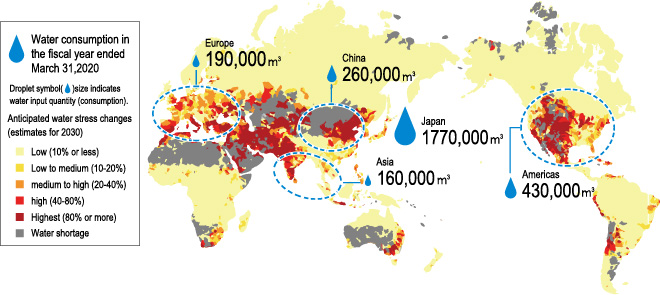
Water stress (2030 Prediction) and water consumption by region
To protect the water resource, the NTN Group is globally working on reducing water consumption and improve water consumption intensity. We conduct water stress analysis by using Aqueduct (a tool released by the World Resources Institute (WRI) that provides free maps and information showing global water risks).
Reducing water consumption
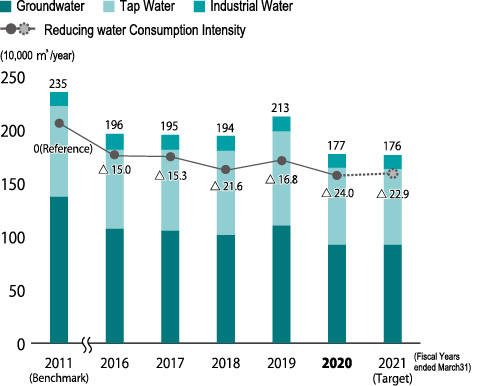
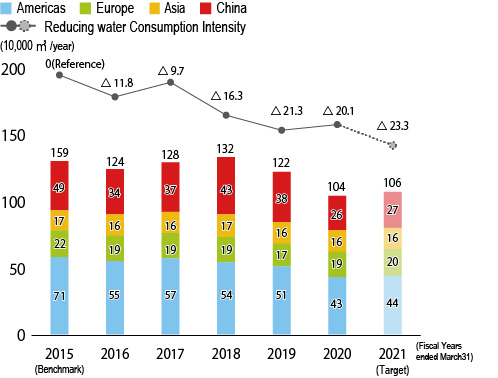
Our Japanese business sites achieved to meet our water consumption intensity target in the fiscal year ended March 31, 2020. (reduction of 17.3% relative to the fiscal year ended March 31, 2011.) Our overseas business sites achieved to meet our water consumption intensity target in the fiscal year ended March 31, 2020. (reduction of 16.7% relative to the fiscal year ended March 31, 2015.) We will continue to reduce our water consumption and water consumption intensity target in the fiscal year ending March 31, 2021. Japan: reduction of 22.9% relative to the fiscal year ended March 31, 2011. Oversea: reduction of 23.3% relative to the fiscal year ended March 31, 2015.
■Water consumption(Japan)*
■Water consumption(Overseas)*
Please refer to Environmental Targets: Business Sites with Performance and ISO14001 (2015 version) Acquisition Status for the target business establishments water consumption.
Engineering Plastics Works(Japan)
Reducing Water Consumption in Washing Process
As a result of investigating the usage status of the main waterworks used in the manufacturing process, Engineering Plastic Works found that the amount used in the cleaning equipment after barrel process for injection molded products is large. When the quality assurance, production technology, and manufacturing departments collaborated with each other with the Energy-saving/Resource-saving Committee at the core to consider reducing the amount of cleaning water used, added a product detection sensor to the cleaning equipment, and modified it to spray cleaning water only when the product is in the cleaning position. Through this modification, we have reduced the amount of water consumption by 4,700 m3/year which is about 16% of the previous year consumption, while maintaining the cleaning quality.
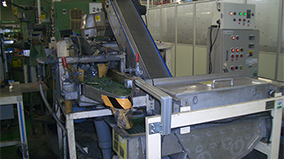
Barrel machine and cleaning equipment
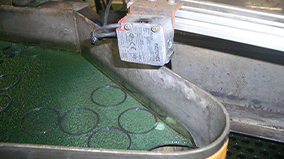
Produtcts detection sensor
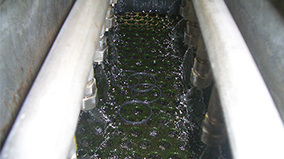
Cleaning nozzle(ON)
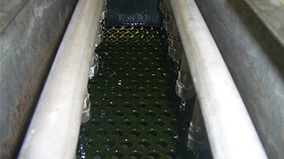
Cleaning nozzle(OFF)
NTN-Bower Hamilton (U.S.A.)
Reduction of concentrated coolant consumption by installing automatic coolant mixing equipment
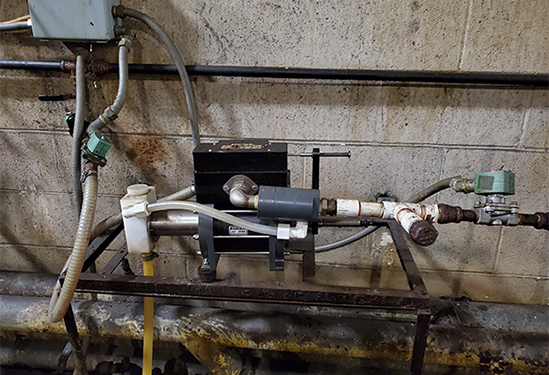
At NTN-BOWER Hamilton Plant, when the volume of water-soluble coolant decreased, concentrated coolant and water were manually mixed to refill water-soluble coolant. Furthermore, the concentration of coolant fluctuates due to evaporation of water, etc. and it was difficult to maintain concentration at an optimum level. This time, we have installed automatic coolant mixing equipment that maintains the optimum concentration automatically, achieving a reduction of 14,400L/year of concentrated coolant and stable water-soluble coolant quality.
■Automatic coolant mixing equipment
Controlling waste generation and maintaining a high recycling rate
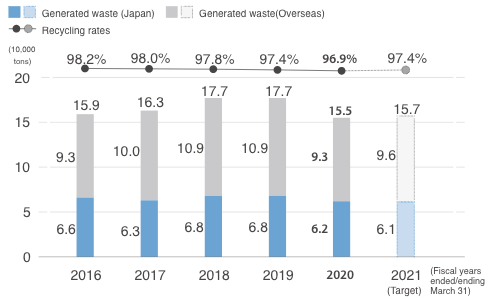
We worked on reducing our waste intensity in the fiscal year ended March 31, 2020, and our business sites in Japan achieved their target of a 4.9% reduction relative to the fiscal year ended March 31, 2011. In the fiscal year ending March 31, 2021, with the aim of reducing waste, we will continue to work on maintaining the waste intensity of our business sites in Japan (a reduction of 4.7% relative to the fiscal year ended March 31, 2011), and on achieving minimum recycling target rates of 97.7% (Japan) and 97.2% (overseas).
■Generated Amount of Waste and Recycled Amount
NTN Kugellagerfabrik (Deutschland) G.m.b.H.(Germany)
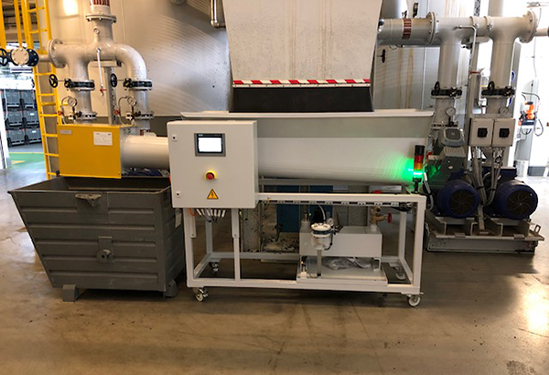
Reduction of waste volume by introducing grinding sludge solidification equipment
At NTN Kugellagerfabrik (Deutschland) G.m.b.H., grinding sludge (grinding chips) is generated in its production process. Grinding sludge contains a lot of coolant and if grinding sludge is discarded without treatment, the contained coolant which can be reused is also discarded wastefully. Thus, the company has introduced grinding sludge solidification equipment that reuses the coolant by compressing grinding sludge to separate coolant and briquettes. As a result, we have succeeded in reducing grinding sludge by about 50 tons/year and reusing the separated grinding coolant.
■Grinding sludge solidification equipment
NTN Driveshaft do Brasil (Brazil)
Reducing plastic waste (elimination of disposable cups)
Activities to improve the environment through participation of employees
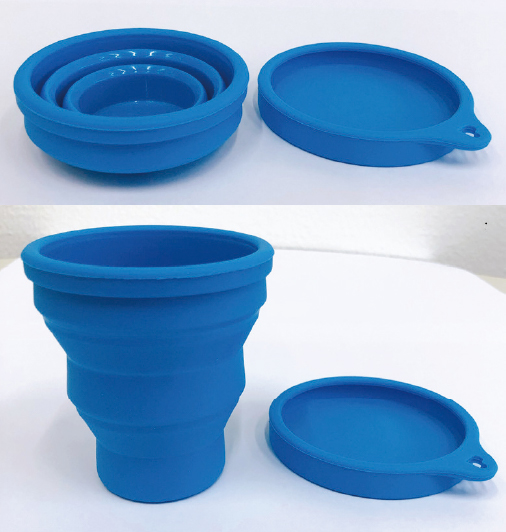
In 2018, the NTN Group established NTN PROUD AWARD, a system that enables employees to take on new challenges and create solutions by setting up an action program based on their day-to-day operations in line with its corporate philosophy. As an action program related to the environment under this system, NTN Driveshaft do Brasil (NDB) has been working to reduce the use of disposable plastic products, which have recently been identified as a source of marine contamination. After receiving an idea from employees, NDB decided to distribute eco-cups that are foldable and easy to use in everyday life and can be used repeatedly. As approximately 150 plastic cups per day were used at NDB, it succeeded in eliminating the use of such cups as a result of introduction of the eco-cups. At NDB, many employees are involved in activities focused on energy-saving and social contribution.
■Eco-Cup
NTN CASTING CORP.(Japan)
Reuse of casting chips
At NTN CASTING CORP., recycling of the metal chips generated from cutting process of casting products was outsourced to a processing company. Since January 2020, we have been thoroughly implementing quality control of metal chips to reuse metal chips as a raw material for casting by remelting them in an electric furnace. This resulted in a reduction of metal scrap by about 720 tons/year.
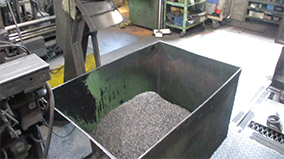
①Accumulation site of cutting chips after processing
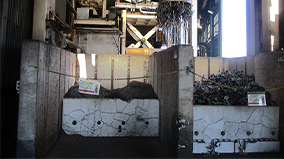
②Cutting chips is automatically weighted by the lifting magnet and transport to electric furnace material yard.
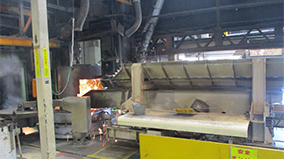
③Load cutting chips to electric furnace together with other materials with
the transfer carriage.
NTN CASTING CORP.(Japan)
Reuse of waste shot blast sand
Cast products taken out of the sand mold are shot blasted to remove adhered casting sand. Waste shot blast sand generated in this process had been landfilled because waste shot blast sand, which is a mixture of steel shot powder and casting sand, was difficult to recycle as metal scrap.
By outsourcing to a processing company with technology to separate iron and casting sand, iron can be recycled with an electric furnace steelmaker and casting sand is reused for casting cores. We could reduce the amount of landfilled waste by 300 tons/year, which is about 20% of the total amount of landfilled waste in the previous fiscal year.